The next Maha Shivaratri Vratam falls on Saturday, 6 March 2027. Worship runs through that night and spills past midnight into the early hours of 7 March. Most pages hand you one set of puja timings and present them as national timings. Those windows are wrong for your city, because each one is calculated from your own local sunset and sunrise.
Sri Vyasa Pooja is an independent pilgrim guide. We are not affiliated with, endorsed by, or the official website of any temple, devasthanam, or endowments department. We take no bookings, donations or payments. Every seva reservation below routes to the temple’s own official portal.
Maha Shivaratri Vratam at a Glance
- Next Maha Shivaratri Vratam: Saturday, 6 March 2027, with the vigil continuing into 7 March.
- Tithi: Krishna Paksha Chaturdashi, which begins 12:03 PM on 6 March and ends 1:46 PM on 7 March (IST).
- Main worship window: Nishita Kaal, the roughly 49-minute band around midnight.
- Fast breaks: the next morning, during the Parana window after sunrise.
- Prahar and Nishita clock times shift by city, so check a panchangam set to your own town.
- Previous observance: Sunday, 15 February 2026. The following one falls on Wednesday, 23 February 2028.
When Is the Next Maha Shivaratri Vratam?
The Maha Shivaratri Vratam of 2027 falls on Saturday, 6 March. Drik Panchang places Krishna Paksha Chaturdashi from 12:03 PM on 6 March until 1:46 PM on 7 March, in Indian Standard Time. Because the tithi covers the midnight of 6-7 March, that night carries the observance. The vrat therefore starts on the 6th, although the fast breaks on the morning of the 7th.
You can confirm the year’s date on the Drik Panchang Maha Shivaratri page, which recalculates for whichever city you select. That habit matters more than it sounds, since the date itself is national but almost nothing else is.
Why the Date Moves Every Year
The Maha Shivaratri Vratam tracks the moon, not the Gregorian calendar. It lands on the fourteenth night of the waning fortnight, so it drifts between mid-February and early March. In 2026 it arrived on 15 February, while 2027 pushes it out to 6 March, a full nineteen days later.
Older pages still circulate the 2022 date of 1 March as though it were current. Treat any Shivaratri page without a stated year as unreliable, because a four-year-old tithi is simply a wrong tithi.
Magha or Phalguna: One Festival, Two Names
South Indian almanacs place Maha Shivaratri in Magha masam. North Indian almanacs place it in Phalguna. Plenty of articles read this as two separate festivals on two separate nights, which is a misreading. Both traditions observe the same night; only the naming convention for the lunar month differs.
Maha Shivaratri Vratam Timings Change With Your City
This is the correction that matters most, and almost no competing page makes it. The prahar and Nishita windows derive from local sunset and sunrise. So a Delhi timetable is genuinely wrong in Hyderabad, Chennai or Bengaluru, sometimes by half an hour.
Below are two verified 2027 sets from Drik Panchang, printed side by side so the drift is visible.
| Window | New Delhi | Latur, Maharashtra |
|---|---|---|
| First Prahar | 6:24 PM to 9:28 PM | 6:31 PM to 9:33 PM |
| Second Prahar | 9:28 PM to 12:32 AM | 9:33 PM to 12:35 AM |
| Nishita Kaal | 12:07 AM to 12:57 AM | 12:11 AM to 12:59 AM |
| Fourth Prahar ends | 6:40 AM | 6:39 AM |
| Parana (7 March) | 6:40 AM to 1:46 PM | 6:39 AM to 1:46 PM |
Read the Nishita row again. Delhi opens at 12:07 AM while Latur opens at 12:11 AM, and the gap widens further south and west. The tithi is national, yet the clock is local.
How to Get Your Own City’s Windows
Open a panchangam that lets you set a location, then change the city before you note anything down. Drik Panchang, your family’s Gantala or Kanchi almanac, and most temple-published calendars all support this. If a page offers no city selector, assume it printed Delhi timings and move on.
The Four Prahars of the Night
Devotees keeping the Maha Shivaratri Vratam split the night into four watches, or prahars, and offer worship in each. Many keep a single puja during Nishita Kaal instead, which tradition fully accepts. The four-prahar route asks a great deal of your body, so choose it deliberately rather than by default.
| Prahar | Rough window | Common practice |
|---|---|---|
| First | Sunset to about 9:30 PM | Abhishekam with water, bilva leaves offered |
| Second | About 9:30 PM to midnight | Abhishekam with milk or curd |
| Third | Midnight to about 3:30 AM | Abhishekam with ghee, Nishita puja falls here |
| Fourth | About 3:30 AM to sunrise | Abhishekam with honey, closing aarti |
The substances used in each watch vary by sampradaya and by family custom. Treat the third column as widely followed tradition rather than a fixed rule, and follow your own family practice where it differs.
Maha Shivaratri Vratam Fasting Rules, Step by Step
- On Trayodashi, the day before, eat a single satvik meal so the body eases into the fast.
- Bathe on the morning of the vrat, then take the Sankalpa, a spoken resolve to complete the fast.
- Keep the fast through the day, at whichever level you have chosen.
- Bathe a second time in the evening before puja or before leaving for the temple.
- Perform Shiva puja at night, either once during Nishita Kaal or across all four prahars.
- Break the fast the next morning after bathing, inside the Parana window.
One point deserves care because sources genuinely disagree. Drik Panchang notes a contradictory opinion holding that Parana should wait until Chaturdashi ends entirely. The more common view keeps both the puja and the Parana inside Chaturdashi. Ask your family purohit if the distinction matters in your tradition.
Which Level of Fast Actually Suits You
- Nirjala, without food or water: the strictest form. Reserve it for healthy adults with prior fasting experience.
- Phalahara, fruit and milk: the most widely kept level, and the sensible default for working adults.
- One satvik meal: fully valid, and the right choice for students, seniors and anyone travelling.
- Nishita puja without fasting: appropriate when a medical condition rules fasting out.
No level ranks as more sincere than another. The vrat rests on the resolve and the vigil, so a fast you can complete beats a stricter one you abandon at 9 PM.
Health Notes Before You Keep the Maha Shivaratri Vratam
A full night without sleep, combined with a day without food, places real strain on the body. Anyone living with diabetes, low blood pressure or a chronic condition should speak to a doctor before attempting a strict fast. The same applies during pregnancy and for anyone on regular medication with food timings attached.
Two practical cautions are worth stating plainly. Do not drive home after an all-night vigil, because sleep deprivation impairs reaction time as sharply as alcohol. And treat the vrat as devotion, since no fast or ritual substitutes for medical treatment.
Puja Vidhi at Home
Keep the Maha Shivaratri Vratam puja simple and unhurried. The sequence below works at home, whether you offer one puja or all four.
- Clean the puja space and set a lamp before sunset, while there is still light.
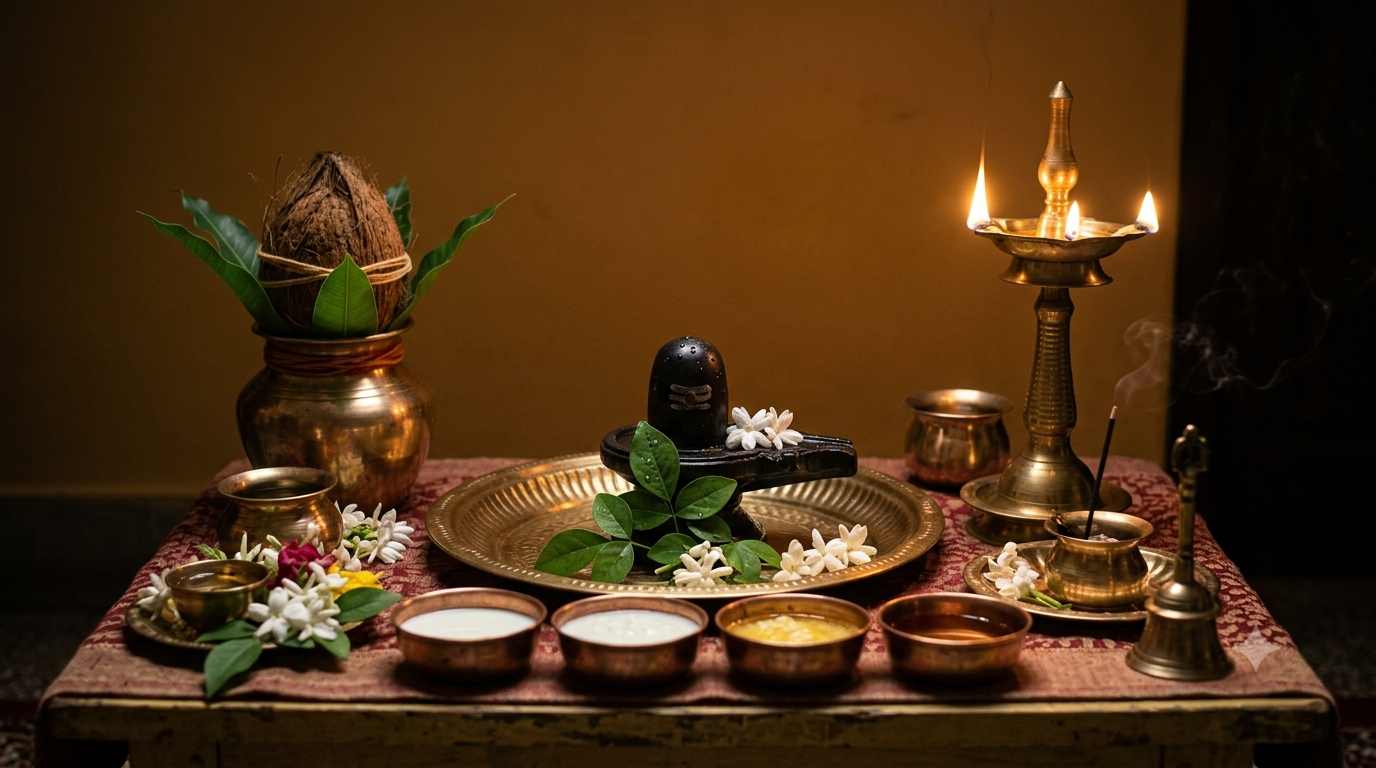
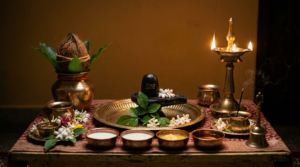
- Place the Shivalinga or a Shiva image on a clean plate that can hold the abhishekam flow.
- Begin with Ganapati prarthana, then take the Sankalpa for the night’s worship.
- Offer abhishekam with water first, followed by milk, curd, ghee and honey as your tradition prescribes.
- Offer bilva leaves with the smooth side facing down, along with vibhuti and white flowers.
- Chant Om Namah Shivaya, or recite the Rudram if a family member knows it correctly.
- Close each watch with a deepa aradhana before resting briefly until the next prahar.
For the Shodashopachara sequence with full mantras, the Drik Panchang Shivaratri puja vidhi sets out all sixteen steps. Devotees who prefer a stotra through the night often turn to the Shiva Tandav Stotram in Telugu.
Samagri You Will Need
- Bilva (maredu) leaves, ideally in sets of three joined leaflets
- Milk, curd, ghee, honey and sugar for the panchamrita abhishekam
- Gangajal or clean water in a separate kalasham
- Vibhuti, chandanam, kumkum and white flowers such as jasmine or datura
- Camphor, incense, a brass lamp and enough oil to burn until dawn
- Fruit and milk for the fast, plus simple food ready for the Parana
Mistakes That Weaken a Maha Shivaratri Vratam
The first mistake is copying timings from a page with no city selector. The second is starting a nirjala fast on impulse, then breaking it badly at midnight with heavy food.
A third and costlier error involves booking. Around Shivaratri, fake seva-booking sites multiply, and they collect payment for darshan slots they cannot issue. Book only through a temple’s own domain or the state endowments portal, and never through a link that arrives by WhatsApp forward.
One more habit worth breaking: many devotees offer bilva leaves with the smooth surface upward. Tradition places the smooth side against the linga, so turn the leaf before offering.
Temple or Home: Which Suits You
Home worship lets you keep the Maha Shivaratri Vratam through all four prahars without queue pressure, so it suits families with children or elders. Temple darshan gives you the collective energy of the night, although queues at major Shiva kshetras run for hours on this one date.
At Srisailam, Maha Shivaratri sits inside a multi-day Brahmotsavam, and accommodation fills weeks ahead. Reserve only through the Srisaila Devasthanam official website or the Andhra Pradesh endowments portal at aptemples.ap.gov.in. Our own Srisailam Shivaratri Brahmotsavam guide covers the vahana seva sequence, while pilgrims heading to Tamil Nadu can check Arunachaleswarar Temple darshan timings before travelling.
Before the Night Begins
Fix three things a week before the Maha Shivaratri Vratam. Pull your own city’s prahar windows from a panchangam, decide honestly which fasting level your body can hold, and book any temple stay through official channels only.
Then keep the night simple. A single sincere Nishita puja, kept with a clear head and a steady lamp, carries the vrat further than an exhausted four-prahar attempt. If you want to continue the practice monthly, the Pradosha Vratam guide and our note on the significance of Masa Shivaratri take it forward.
Maha Shivaratri Vratam FAQs
What date is Maha Shivaratri in 2027?
Maha Shivaratri falls on Saturday, 6 March 2027. Krishna Paksha Chaturdashi runs from 12:03 PM on 6 March to 1:46 PM on 7 March in Indian Standard Time. The night worship therefore belongs to 6 March, while the fast breaks on the morning of the 7th.
Can I drink water during the Maha Shivaratri Vratam?
Yes, unless you have specifically taken a nirjala resolve. Most devotees keep phalahara, which permits water, milk and fruit through the day. Water is the safest choice if you plan to stay awake all night.
What time should I break the fast?
Break it on the morning after, once you have bathed, inside the Parana window that opens at sunrise. In Delhi that window runs from 6:40 AM to 1:46 PM on 7 March 2027. Your city’s sunrise shifts the opening time, so check a local panchangam.
Is the four-prahar puja compulsory?
No. A single puja during Nishita Kaal fulfils the Maha Shivaratri Vratam completely. The four-prahar form is an intensive option for devotees who can manage a full night’s vigil safely.
Which leaves are offered to Shiva on this night?
Bilva leaves, called maredu dalam in Telugu, are the central offering. Devotees look for stems carrying three leaflets and place the smooth side against the linga. Tulsi is generally avoided in Shiva worship.
Do North and South India observe Maha Shivaratri on different days?
No, both observe the same night. South Indian almanacs name the month Magha and North Indian almanacs name it Phalguna, yet the tithi and the night are identical. The difference is purely one of lunar-month naming.
Can pregnant women or diabetics keep this vrat?
Many do, though only at a modified level and after medical advice. A doctor should guide any decision to skip meals or medication timings. Devotion is not measured by the severity of the fast.
How do I book a Shivaratri seva at a temple?
Use the temple’s own official website or the relevant state endowments portal, and nothing else. Srisailam sevas go through srisailadevasthanam.org or the Andhra Pradesh endowments portal. We are an information guide and cannot take bookings on any temple’s behalf.