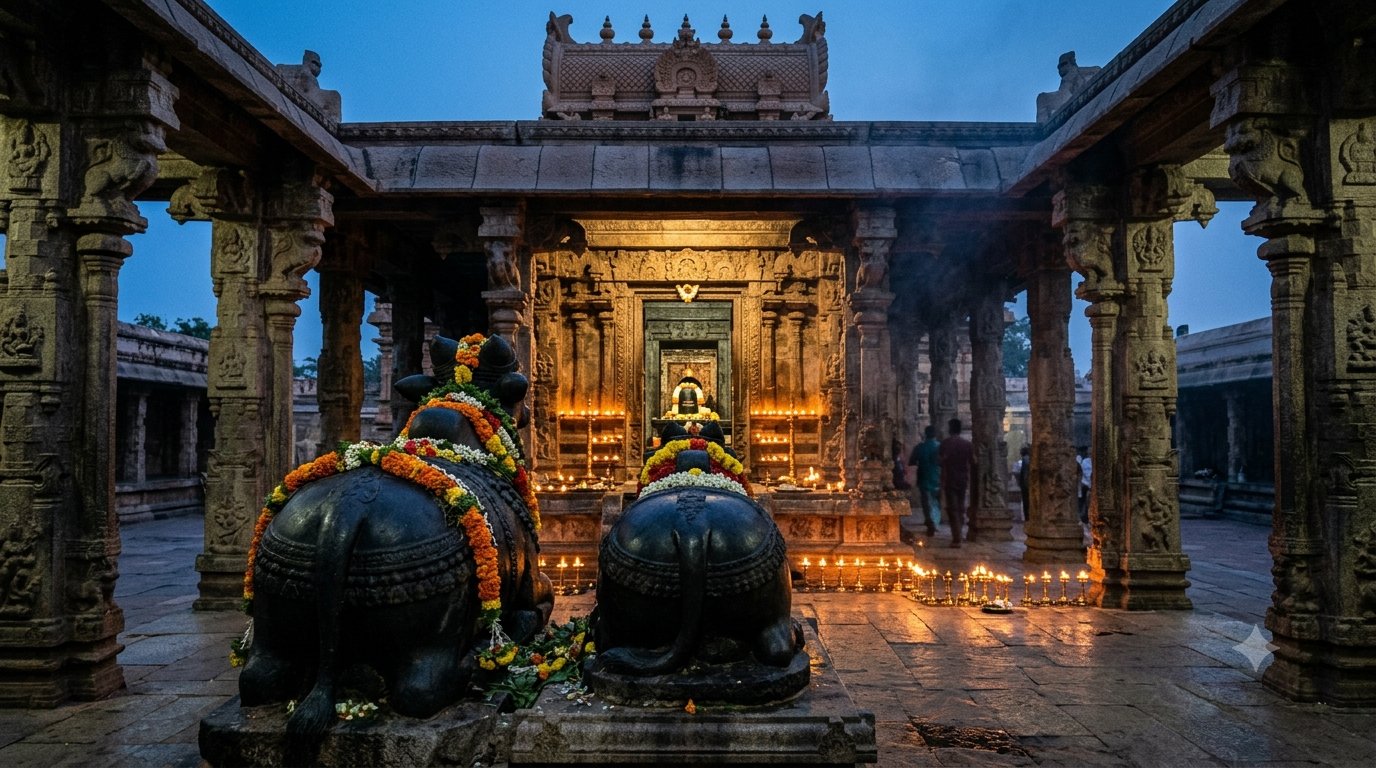
The importance of Pradosha Pooja rests less on what you offer and far more on the hour you offer it. Most pages list the items and stop there. Yet tradition places the entire weight of this observance on a narrow twilight window that opens as the sun goes down on Trayodashi.
This guide explains why that hour carries so much meaning. You will also find the Nandi connection, the crescent-shaped walk almost no article describes, and an honest look at what the vratam promises.
Sri Vyasa Pooja is an independent devotional guide. We are not the official website of any temple, trust, or government body, and we accept no bookings, donations, or payments. For sevas, please use a temple’s own official channel.
The Importance of Pradosha Pooja in One Answer
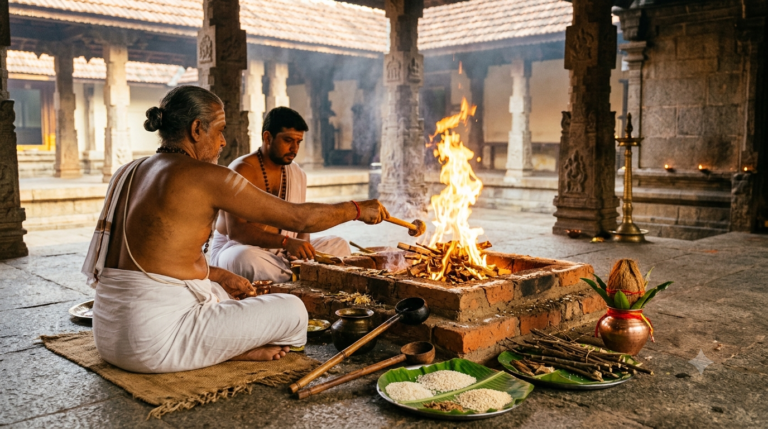
Pradosha Pooja is Shiva worship performed in the twilight after sunset on Trayodashi, the thirteenth lunar day. Tradition holds that Shiva forgave the devas in that hour and danced between the horns of Nandi. Because of that moment, devotees treat the window as the most merciful stretch of the entire fortnight.
Quick Facts Before You Read On
- Deity: Lord Shiva, worshipped together with Nandikeshwara.
- Sacred hour: Pradosh Kaal, the twilight straddling sunset.
- Tithi: Trayodashi in both the waxing and waning fortnights.
- Frequency: Twice a lunar month, so roughly 24 times a year.
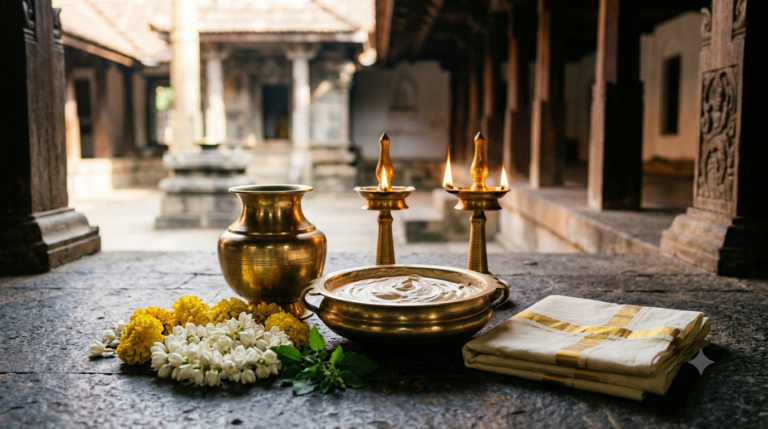
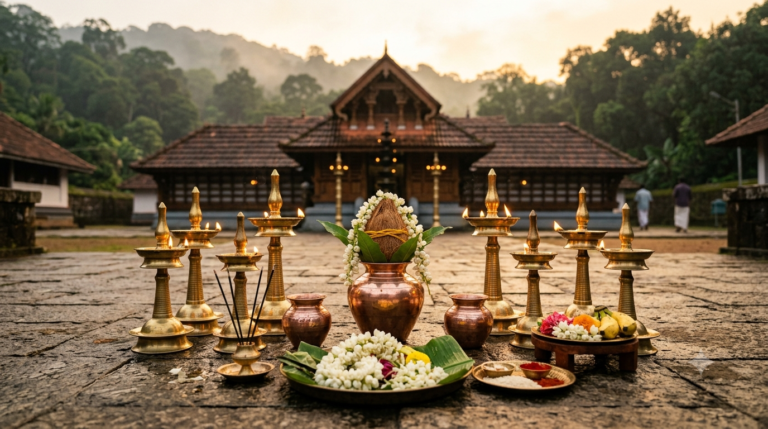
- Signature ritual: Abhishekam, bilva leaves, and soma sutra pradakshina.
- Core meaning: Pra plus dosha, read traditionally as the removal of fault.
Why Twilight Carries the Importance of Pradosha Pooja
Sandhya, the seam between day and night, is treated across Hindu practice as a thin place. Pradosham simply takes that daily seam and links it to Trayodashi. So the merit is understood to come from the meeting of a particular tithi with a particular hour.
This is why a midday puja does not count as Pradosham worship, however sincere it may be. The ritual belongs to dusk because Shiva is held to be most graciously present then. If you shift the timing, you keep the devotion yet lose the occasion.
Where the Sources Actually Disagree
Here the honest answer matters more than a confident one. Different authorities describe the window differently, and the gap is real.
Shaiva tradition often cites roughly 4:30 to 6:00 in the evening. Wikipedia’s summary of the practice describes a three-hour span, running about 1.5 hours on either side of sunset. Drik Panchang, which computes city-wise timings, fixes the vrat day by whether Trayodashi actually overlaps Pradosh Kaal after sunset.
Treat every clock figure as approximate, since sunset itself moves through the year and across the map. Always confirm your own city’s window on a location-aware panchang before you begin.
The Puranic Story Behind the Importance of Pradosha Pooja
The devas and asuras churned the ocean of milk while hunting for amrita, the nectar of immortality. Before the nectar surfaced, a terrible poison called halahala rose instead. Shiva swallowed it so creation could survive, and Parvati held his throat so it would go no further. That is how he became Neelakantha, the blue-throated one.
The part most retellings skip comes next, although it is the part that actually creates Pradosham. The nectar appeared on Dwadashi, the twelfth day. In their delight the devas celebrated at once, yet nobody thanked the god who had made the victory possible.
On Trayodashi they recognised the lapse and asked forgiveness. Shiva pardoned them, then danced between the horns of Nandi in the evening hour. Because forgiveness was granted at exactly that moment, the twilight of Trayodashi became Pradosham.
Nandi Worship and the Importance of Pradosha Pooja
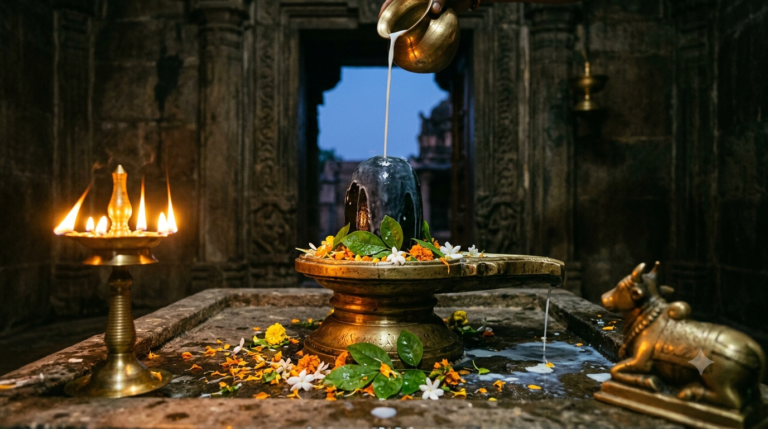
Nandi is not decoration on this day, and that surprises many devotees. Since Shiva danced between his horns, the sacred bull becomes part of the worship rather than a doorway figure you pass. Across South Indian Shiva temples, priests perform abhishekam to Nandikeshwara alongside the Lingam during this hour.
The utsava idols of Shiva and Parvati, seated on Nandi, are then carried around the temple complex. If you have wondered why Pradosham evenings feel busier than ordinary evenings, this procession is usually the reason.
Soma Sutra Pradakshina, the Crescent Walk
Pradosham has its own form of circumambulation, and very few guides explain it. Instead of full circles, devotees trace a back-and-forth path between Nandi and Chandikeshwara. The route is walked so that the gomukhi is never crossed.
The gomukhi is the outlet where abhisheka water leaves the sanctum, flowing northwards. Because that water is holy, stepping over it is avoided entirely. So the walker turns back each time and reverses direction instead.
The finished path curves like a crescent, which is where the name soma sutra comes from. Three such rounds make the full observance. At the close, devotees view the Lingam through the space between Nandi’s horns, echoing the dance itself.
What Each Abhishekam Offering Traditionally Grants
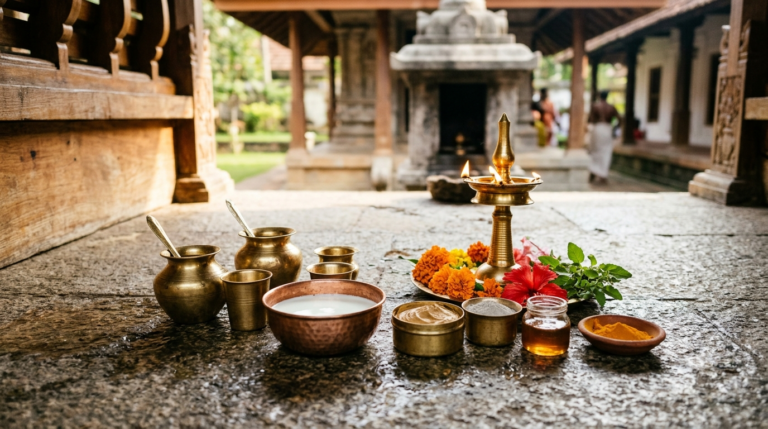
Shaiva tradition attaches a distinct fruit to each anointing substance. The table below follows the classification recorded by Shaivam.org. These are matters of faith and inherited practice, so read them as tradition rather than as promised outcomes.
| Offering | Traditional association |
|---|---|
| Milk | Long life |
| Ghee | Liberation |
| Curd | Good children |
| Honey | Melodious voice |
| Rice powder | Freedom from debts |
| Sugarcane juice | Good health |
| Panchamritam | Wealth |
| Sugar | End of enmity |
| Tender coconut | Contentment |
| Sandal paste | Grace of Lakshmi |
Notice that panchamritam, the five-nectar mixture, carries its own association distinct from its parts. Bilva leaves and flowers accompany the abhishekam in almost every household. Still, the older texts insist that sincerity outweighs the shopping list.
Five Kinds of Pradosham and Where the Meaning Peaks
Pradosham is not a single event, although most articles treat it that way. Shaiva reckoning recognises five layers, and each one widens the scale.
- Nitya Pradosham: the twilight that arrives every single day.
- Paksha Pradosham: the Trayodashi twilight of each fortnight, which is the fast people usually mean.
- Masa Pradosham: the second Trayodashi falling within a month.
- Varsha Pradosham: the yearly one preceding Maha Shivaratri.
- Yuga Pradosham: the cosmic dissolution at the close of an age.
This layering is the quiet argument for the practice. Because a Pradosham arrives daily in miniature, the fortnightly fast is really a reminder rather than a rare opportunity. If you want the annual peak, our guide to Masa Shivaratri and its pooja vidhanam covers the Shivaratri cycle in detail.
Weekday Names and the Importance of Pradosha Pooja
The weekday on which Trayodashi lands gives each Pradosham a separate name and emphasis. Soma Pradosham falls on Monday and draws devotees seeking peace of mind. Shani Pradosham lands on Saturday, when many pray for relief from Saturn’s pressures.
Saturday’s observance is often honoured as Maha Pradosham, so temples schedule their most elaborate abhishekam then. Expect longer queues and a slower darshan line on those evenings. For the Saturn connection specifically, our Navagraha Shanti Pooja guide explains the wider remedial framework.
These weekday associations come from astrological tradition and devotee belief. They are not guaranteed results, and no honest guide should present them as such.
How the Importance of Pradosha Pooja Compares With Other Shiva Vratams
Devotees often ask which Shiva observance deserves their limited time. The importance of Pradosha Pooja lies in its rhythm, because it returns every fortnight and asks for a single evening. Maha Shivaratri, by contrast, arrives once a year and expects a full night’s vigil.
Monday vratams sit between the two, since they repeat weekly yet carry no fixed twilight requirement. So a practical order emerges for most households. Keep Shivaratri as the annual anchor, treat Pradosham as the fortnightly discipline, and add Mondays when your schedule allows.
That comparison explains the enduring importance of Pradosha Pooja better than any benefit list. It recurs often enough to build a habit, yet stays short enough to actually keep.
Temple or Home: Where Pradosha Pooja Belongs
A temple visit lets you witness the Nandi abhishekam, the procession, and the soma sutra walk. None of those can be reproduced fully in a living room, so the temple remains the fuller experience where one is reachable.
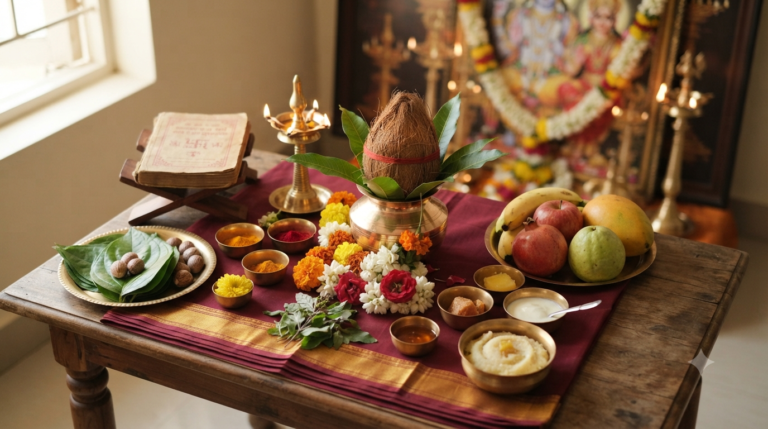
That said, a home puja is entirely valid, and tradition is generous about it. The Skanda Purana is widely cited for the view that a single lamp lit with devotion during this hour pleases Shiva. If a temple is far, light the lamp and chant where you are.
For the step-by-step method, the verified dates, and the exact Pradosh Kaal calculation, see our companion guide to Pradosha Vratam dates and puja vidhi. A related Monday observance is covered in our Karthika Somavaram vratham guide.
Fasting, Health, and Honest Expectations
Two fasting styles are common, so choose the one your body can carry. Some devotees take nothing until the next sunrise, while others fast only until the evening puja and then break it lightly.
A vratam is a spiritual discipline and never a medical treatment. If you are pregnant, elderly, diabetic, unwell, or on regular medication, keep a partial fast instead. Drink water, and speak with your doctor before attempting anything strict.
No ritual replaces medical care, and no reputable tradition claims otherwise. The blessing is understood to lie in devotion, not in how far you push your body.
What Most Pages Get Wrong About the Importance of Pradosha Pooja
Four errors circulate widely, and each one quietly damages the observance.
- Fixed clock times: the frequently copied “4:30 to 6:00 PM” is a rough South Indian convention, not a rule. Since sunset moves, the real window moves with it.
- One national date: because Pradosh Kaal depends on local sunset, the fasting day can differ by a day between cities. Verify yours.
- Guaranteed outcomes: benefit lists are traditional associations, yet many pages present them as certainties. That framing is neither honest nor scriptural.
- Fake booking pages: some sites imitate temples and collect payment for a “Pradosham pooja” that never happens. Book only through a temple’s own official portal.
One more point deserves mention, since it comes up constantly. Nandi worship is not optional decoration on this day. If a guide describes Pradosham without Nandi, it has missed the story that created the observance.
Before Your Next Pradosham
The importance of Pradosha Pooja comes down to three things worth remembering. Get the hour right, because the twilight is the occasion itself. Include Nandi, since the whole tradition traces back to that dance between his horns.
Finally, hold the benefit lists gently, as inherited faith rather than transaction. For exact city timings, the Drik Panchang Pradosham list is the source worth trusting. The crescent walk itself is documented at Shaivam.org if you want the full path.
Frequently Asked Questions on the Importance of Pradosha Pooja
What does the word Pradosham actually mean?
Devotional tradition reads it as pra plus dosha, meaning the removal of fault or blemish. In plain calendar terms, pradosha simply denotes the early part of night. Both readings sit comfortably together, because the hour and the meaning are linked.
Why is Nandi worshipped during Pradosham?
Because Shiva is said to have danced between Nandi’s horns after forgiving the devas on Trayodashi. Temples therefore perform abhishekam to Nandikeshwara alongside the Lingam. Devotees also view the Lingam through the gap between his horns.
Is Pradosha Pooja more powerful than daily Shiva worship?
Tradition treats it as an especially favourable hour rather than a superior ritual. The offerings stay the same, so what changes is the timing and the intent. Many devotees keep daily worship and simply deepen it on Trayodashi.
Which Pradosham is considered the most significant?
Shani Pradosham on Saturday is widely honoured as Maha Pradosham, and Soma Pradosham on Monday follows closely. Both draw heavy temple crowds. Neither is compulsory, though, since every Pradosham carries the same essential meaning.
Can I observe Pradosham without fasting at all?
Yes. Fasting strengthens the discipline, yet it is not the source of the merit. Lighting a lamp and offering prayer during Pradosh Kaal is accepted as complete, particularly where health makes fasting unwise.
Do the abhishekam benefit lists work as promised?
They are traditional associations preserved in Shaiva practice, not verified outcomes. Treat them as devotional symbolism, because that is how the texts themselves function. Anyone guaranteeing results is selling something.
What is soma sutra pradakshina in simple terms?
It is a back-and-forth circumambulation performed only during Pradosham. The walker never crosses the gomukhi, the channel carrying abhisheka water out of the sanctum. Since the traced path resembles a crescent, the practice takes its name from soma, the moon.