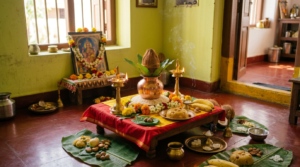
The Satyanarayana Vratam is one of the simplest yet most beloved rituals in Hindu households, and almost every family turns to it at some point for peace and prosperity. Devotees worship Lord Satyanarayana, a gentle form of Lord Vishnu whom tradition honours as the very embodiment of truth. Because the ritual needs no temple, no priest, and no expense, anyone can perform the Satyanarayana Vratam at home with sincere devotion. This guide explains what the vratam means, when to observe it, the five sacred stories at its heart, and the honest facts that many other pages get wrong.
Sri Vyasa Pooja is an independent devotional guide. We are not affiliated with, or endorsed by, any temple or trust, and we do not accept bookings, donations, or payments. For any temple ritual booking, use the official portal linked below.
Satyanarayana Vratam at a Glance
- What it is: a home or temple worship of Lord Satyanarayana, a form of Vishnu.
- Best days: Purnima (full moon) and Ekadashi, though any day works.
- Core ritual: Ganesha prayer, kalasha setup, worship, and the five-chapter katha.
- Prasadam: sweet sapatha made of rava, ghee, sugar, banana, and milk, with Tulsi.
- Who can do it: anyone, regardless of caste, gender, or means.
- Famous temple: Sri Veera Venkata Satyanarayana Swamy Temple, Annavaram.
What Is Satyanarayana Vratam?
The Satyanarayana Vratam is a vow-based worship of Lord Satyanarayana that seeks prosperity, harmony, and the fulfilment of sincere wishes. Devotees observe a day-long fast, worship the Lord with sixteen ritual steps, and listen to five sacred stories. Afterwards, everyone shares the blessed prasadam. Families perform it either to ask for a blessing or to give thanks once the Lord grants a wish.
The name itself carries the meaning. “Satya” means truth, while “Narayana” is the supreme being. So devotees revere Satyanarayana as the God who is truth in its highest form. Because of this, the Satyanarayana Vratam is not only a request for material comfort but also a quiet vow to live honestly.
Why Devotees Perform the Vratam
Most Hindu families keep the Satyanarayana Vratam because it fits almost every important moment in life. People observe it before a wedding, after moving into a new home, when starting a business, or simply once a year for family wellbeing. In devotional tradition, devotees believe the worship removes obstacles and invites abundance into the household.
These blessings remain matters of faith and long tradition, not guaranteed outcomes. The deeper value many devotees describe is the calm that comes from gathering family, sharing a story, and pausing to give thanks. That said, the Satyanarayana Vratam aims to support an honest life, so it never replaces effort or good judgement.
Why This Vratam Spread So Widely
Unlike many elaborate poojas, this tradition stayed accessible from the very start. It fixes no special day, raises no caste barrier, and demands no minimum cost, so it travelled easily across regions and communities. Because the katha rewards simple devotion over grand display, poor and wealthy families alike adopted it. This openness, more than any single blessing, explains why the Satyanarayana Vratam became a household ritual across India.
When to Perform Satyanarayana Vratam
You can perform the Satyanarayana Vratam on any day, yet some days carry special merit. The full moon day, called Purnima or Pournami, remains the most popular choice. Ekadashi, the eleventh lunar day, also ranks high. Many families additionally choose birthdays, anniversaries, or festival days.
You can hold the puja in the morning or the evening. Many prefer evening worship, since devotees then break their fast with the prasadam. If you plan a morning puja, first check a reliable panchang such as Drik Panchang, because the Purnima tithi sometimes ends early in the day.
Upcoming Purnima Dates for Worship
The dates below list the main Purnima days when families commonly perform the Satyanarayana Vratam. Always confirm the exact tithi and muhurat for your city, since timings shift by location.
| Purnima | Date | Weekday |
|---|---|---|
| Guru Purnima | 29 July 2026 | Wednesday |
| Sravana Purnima | 27 August 2026 | Thursday |
| Bhadrapada Purnima | 26 September 2026 | Saturday |
| Sharad Purnima | 25 October 2026 | Sunday |
| Kartika Purnima | 24 November 2026 | Tuesday |
Interestingly, 2026 carries an extra lunar month, so devotees who follow every Purnima gain one additional occasion this year. Even so, the core rule holds in any year, because every full moon suits the worship.
The Satyanarayana Katha: Five Sacred Stories
Listening to the katha forms the heart of the ritual, because the stories explain how the worship began and why it matters. Sage Suta first narrated them to the rishis in the Naimisharanya forest. There are five short chapters, and everyone present listens with attention.
The Five Chapters in Brief
- The origin: Sage Narada, moved by human suffering, asks Vishnu for a remedy. The Lord then reveals this vratam as a path to relief and prosperity.
- The poor Brahmin: a struggling Brahmin in Kashi performs the vratam on Vishnu’s advice, so he gains a peaceful, prosperous life.
- The woodcutter: a poor firewood seller learns of the vratam, observes it faithfully, and prospers.
- The merchant Sadhu: a childless merchant and his wife Leelavati receive a daughter, Kalavati. Later, when the family neglects the prasadam, they face hardship until they honour the vow again.
- King Tungadhwaja: a proud king ignores the prasadam and suffers greatly, until he repents and finally accepts the Lord’s grace.
A Fact Most Guides Get Wrong
Many websites claim the katha comes from the “Reva Khanda” of the Skanda Purana. Yet scholars point out that the Reva Khanda actually covers pilgrimages along the Reva river, where Satyanarayana never appears. In truth, editors added the story to later editions of the Skanda Purana, often with a clear note marking it as a newer addition. Knowing this helps you approach the katha as living tradition rather than a rigid historical text.
Prasadam and Offerings for the Vratam
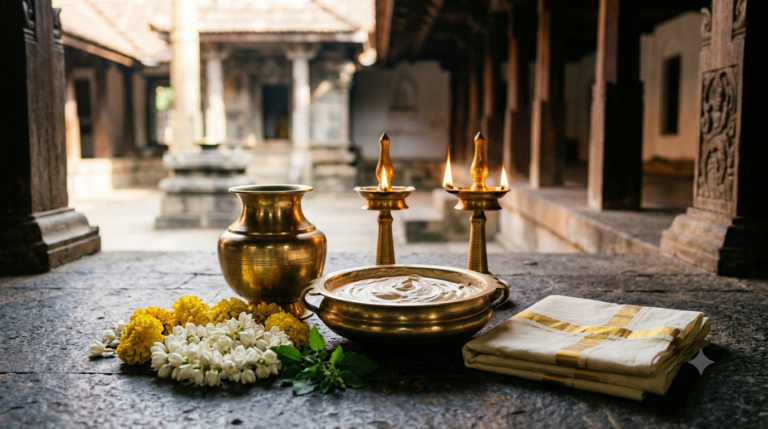
The signature offering is a sweet dish that people call sapatha, sheera, or panjiri, depending on the region. Cooks roast rava, which is semolina or sooji, in pure ghee. They then add sugar or jaggery, mashed banana, cow’s milk, and a little cardamom. Finally, they mix in Tulsi leaves to sanctify the prasadam.
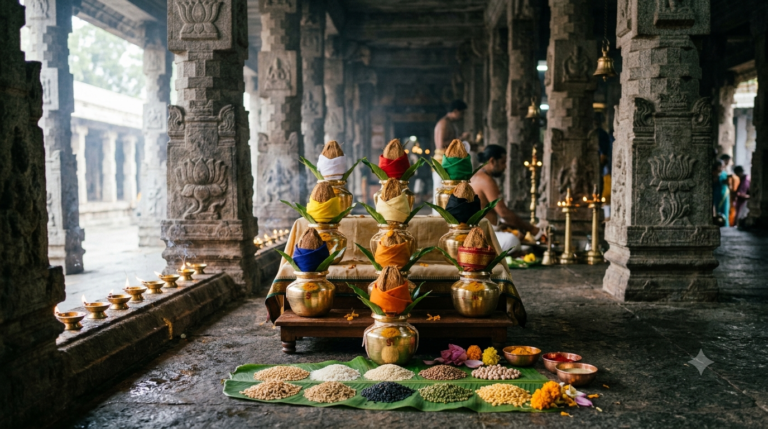
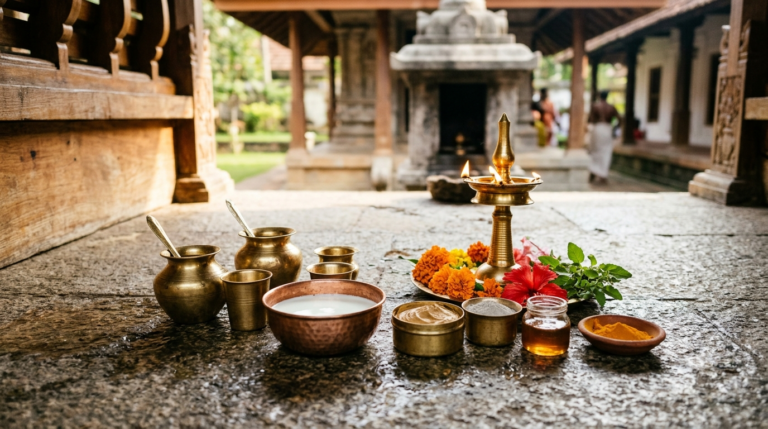
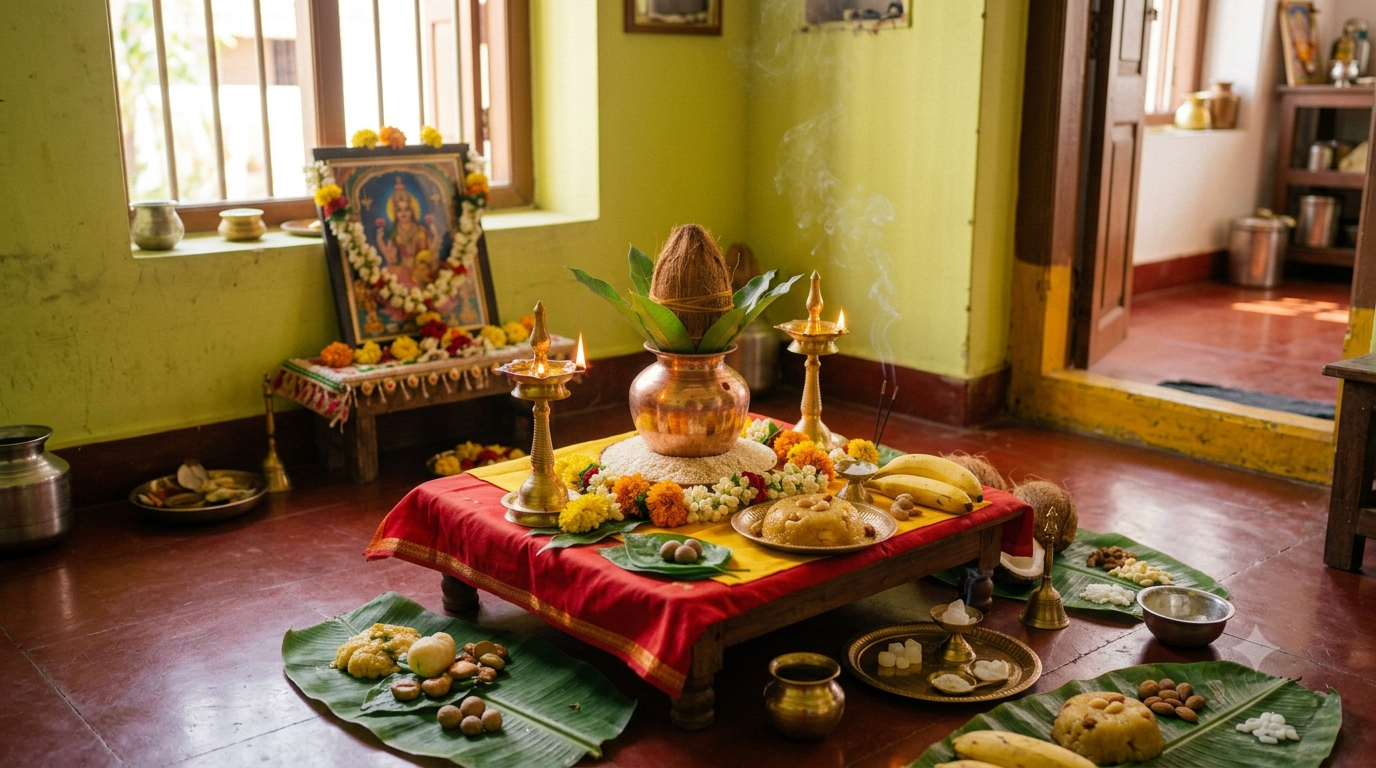
Before the main worship, devotees bathe the deity or the Saligram stone with panchamritam. This blend joins five items: milk, honey, ghee, curd, and sugar. Alongside these, devotees offer fruits, flowers, betel leaves, and coconut. For every item needed for the Satyanarayana Vratam, see our detailed Satya Narayana Vratam pooja list and procedure.
How the Satyanarayana Vratam Is Performed
The Satyanarayana Vratam follows a steady, easy-to-follow sequence that families have kept for centuries. The person leading the puja sits facing east or north on a clean, decorated spot. First comes a prayer to Lord Ganesha to clear obstacles. After that, devotees honour the Navagraha, the nine celestial bodies.
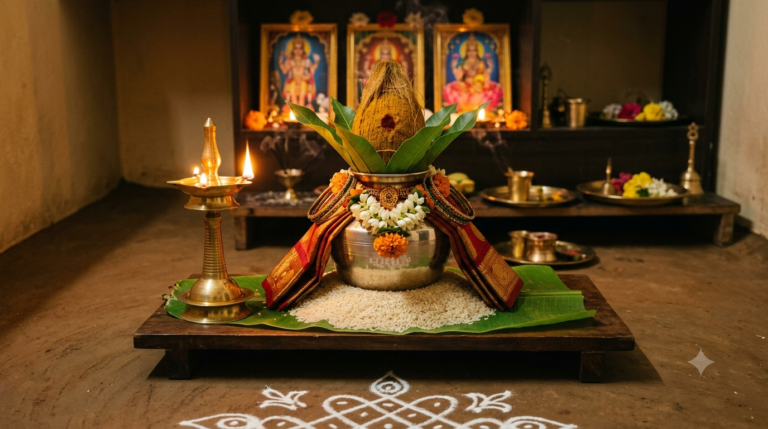
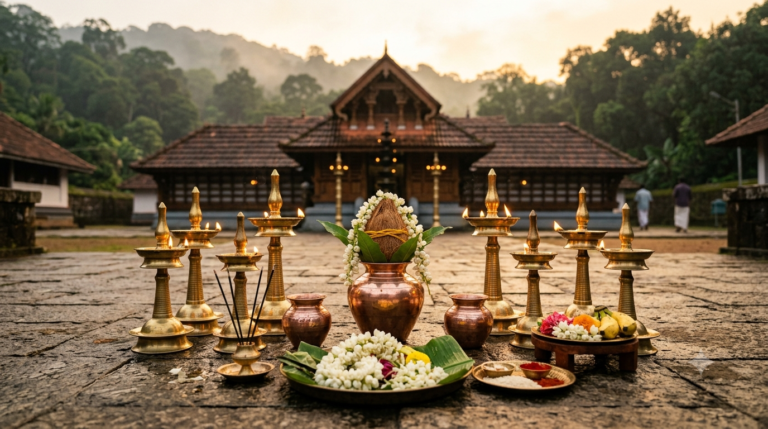
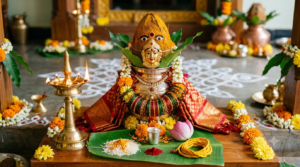
Next, you place a kalasha filled with water on a bed of rice and cover it with mango or betel leaves. You then worship the image of Lord Satyanarayana with the sixteen traditional steps, called shodashopachara. The family reads the katha aloud, an aarti with camphor follows, and everyone shares the prasadam at the end. You can complete every step at home without a priest, although a priest can guide first-timers.
Who Should Perform the Satyanarayana Vratam
Anyone can perform the Satyanarayana Vratam, since the ritual sets no barrier of caste, gender, age, or wealth. Newly married couples often keep it as their first shared act of worship. Families moving into a new house, or launching a new venture, treat it as a blessing for a fresh start.
People also observe the Satyanarayana Vratam out of gratitude, whether after recovering from illness or fulfilling a long-held vow. Because sincerity matters more than grandeur, a modest home puja carries the same devotional weight as a lavish one. The Lord, tradition says, values your bhakti above the size of the offering.
Satyanarayana Vratam at Annavaram Temple
If you prefer a temple setting, priests perform the Satyanarayana Vratam daily at the Sri Veera Venkata Satyanarayana Swamy Temple in Annavaram, Andhra Pradesh. The temple sits atop Ratnagiri Hill in Kakinada district and draws thousands of devotees. Its 13-foot idol stands unique, because it represents the Trinity, with Brahma at the base, Shiva in the middle, and Vishnu at the top.
Vrathams run through the day in batches, and the temple supplies every pooja material. Ticket options stay indicative, and they usually range from about ₹300 for the basic vratham to around ₹2,000 for the air-conditioned hall, while the remote “Paroksha” service costs roughly ₹1,116. Because rates and slots change, confirm current details and book only on the official Annavaram Devasthanam portal or the Andhra Pradesh endowments temples portal. Our step-by-step Annavaram Satyanarayana Swamy Vratham online booking guide walks you through it.
Mistakes and Myths to Avoid
A few common beliefs cause needless worry, so it helps to clear them up. Many people think a priest is compulsory, yet the puja suits householders who lead it themselves. Others assume it can only fall on a full moon, when in fact any sincere day works.
- Rushing the katha: the stories form the core of the vratam, so never skip or hurry them.
- Skipping the sankalpam: the opening vow sets the intention, so always keep it.
- Non-vegetarian food: the prasadam and the day’s meals must stay purely vegetarian.
- Trusting fake portals: for temple bookings, use only the official Devasthanam website.
A Note on Fasting and Health
The Satyanarayana Vratam involves a fast, but the fast should stay gentle, not harsh. Most devotees take fruits, milk, and light sattvic food, then break the fast with prasadam in the evening. If you have diabetes, low blood pressure, or any medical condition, or if you are pregnant or elderly, choose a partial fast and drink enough water.
Please consult a doctor before a strict fast if your health carries any risk. The worship offers a spiritual practice and real comfort, yet it never replaces medical treatment. Honour your body, because devotion and good health belong together.
Before You Begin
The Satyanarayana Vratam endures because it asks so little and gives so much comfort. You need only a clean space, a few simple offerings, an honest heart, and the willingness to listen to the katha. Choose a Purnima or any day that suits your family, prepare the prasadam with care, and worship without hurry. For the full item list, follow our detailed procedure guide, and for a temple vratam, book only through the official Annavaram portal.
Frequently Asked Questions
Can I perform Satyanarayana Vratam at home without a priest?
Yes, you can perform the Satyanarayana Vratam at home on your own. The tradition keeps it simple enough for householders to lead. A priest stays optional and only helps if it is your first time.
On which day should I perform the vratam?
Any day works, but Purnima and Ekadashi carry the most merit. Many prefer evening worship, since they then break the fast with prasadam. Check a panchang for the exact tithi if you plan a morning puja.
What prasadam do devotees offer during the puja?
The main offering is a sweet sapatha made from roasted rava, ghee, sugar, banana, and milk. Cooks add cardamom and Tulsi leaves to sanctify it. Devotees also offer fruits, coconut, and panchamritam.
Do I need to fast for the whole day?
A gentle fast is traditional, usually with fruits, milk, and light sattvic food. Devotees break it with prasadam in the evening. Anyone with a health condition should choose a partial fast and consult a doctor.
Why is the katha so important?
The katha explains the origin, benefits, and lessons of the worship. Devotees treat listening to all five chapters as the heart of the ritual. Families read it aloud so everyone present shares the blessing.
Is the Satyanarayana Vratam only for married couples?
No, anyone can observe the Satyanarayana Vratam regardless of marital status, caste, or gender. Newlyweds often keep it as their first shared worship. Students, singles, and elders perform it just as freely.
Where is the most famous Satyanarayana temple?
The Sri Veera Venkata Satyanarayana Swamy Temple at Annavaram, Andhra Pradesh, ranks as the best known. Priests perform the vratam there daily on Ratnagiri Hill. Book any temple ritual only through the official Devasthanam website.
How often should I perform the vratam?
No strict rule applies, so families decide by their own tradition. Many perform it once a year for wellbeing. Others observe it on special occasions or every Purnima.