The Tiruttani temple pooja list starts at about 5:45 AM and closes near 9 PM. In between sit six daily poojas and a paid seva menu running from roughly ₹750 to ₹10,000. Most pages on this topic still quote fees from several years ago. Pilgrims then reach the counter and find the number has moved.
Below you get the current daily schedule and the seva rates. You also get the official booking route, plus one widely repeated festival claim about Tiruttani that is simply wrong.
Sri Vyasa Pooja is an independent temple guide. We are not affiliated with the Arulmigu Subramanya Swamy Temple or with the Tamil Nadu Hindu Religious and Charitable Endowments (HR&CE) Department. We take no bookings, donations or payments. You arrange every seva at the temple counter or on the official HR&CE portal linked below.
Tiruttani Temple Pooja List at a Glance
- Temple: Arulmigu Subramanya Swamy Temple, Thanigai hill, Tiruttani, Tiruvallur district, Tamil Nadu.
- Administered by: Hindu Religious and Charitable Endowments (HR&CE) Department, Government of Tamil Nadu.
- Daily poojas: six, from Viswaroopa near 5:45 AM to Palliyarai near 8:45 PM.
- Abhishekam: three slots daily, around 8 AM, 12 noon and 5 PM, indicative ₹1,500 for two people.
- Sahasranama archana: indicative ₹750.
- Darshan: general darshan free, special darshan commonly ₹100, VIP ₹200.
- Booking: temple counter, or the official portal at tiruttanimurugan.hrce.tn.gov.in.
- Reaching the sanctum: 365 steps, or a ghat road up to the hilltop parking area.
Treat every figure in this Tiruttani temple pooja list as indicative. Temple fees change by board order, so the counter rate on the day is the only rate that counts.
The Six Daily Poojas in the Tiruttani Temple Pooja List
Six poojas structure the day at Tiruttani. Each one briefly closes the sanctum before darshan resumes. If you want to witness a full ritual, arrive about twenty minutes early.
| Pooja | Usual time | What happens |
|---|---|---|
| Viswaroopa Pooja | 5:45 AM – 6:00 AM | Arathi to the Palliyarai Swamy, then Thiruvamuthootal and deeparathanai to the moolavar |
| Kalasandhi Pooja | 8:00 AM – 9:00 AM | Ritual bathing and decoration of the idols; devotees then enter for darshan |
| Uchikkala Pooja | 12:00 PM – 1:00 PM | The midday round of bathing and alangaram, again followed by darshan |
| Sayaraksha Pooja | 5:00 PM – 6:00 PM | Evening bathing and decoration before the night queue builds |
| Ardhajama Pooja | 6:00 PM – 6:15 PM | A short offering and deeparathanai to the moolavar |
| Palliyarai Pooja | 8:45 PM – 9:00 PM | The night rest ritual, with palanquin and swing service to the urchavar |
Sources report the opening and closing hours slightly differently. Most place the start between 5:45 and 6:00 AM, and the close between 8:30 and 9:00 PM. Because festival days shift these hours, check before you travel.
Our separate guide to Tiruttani temple darshan timings covers the queue pattern in more detail. That page handles the clock; this Tiruttani temple pooja list handles the rituals and their costs.
Full Tiruttani Temple Pooja List with Current Seva Costs
The paid sevas are where the Tiruttani temple pooja list earns its keep, because the price gap is wide. An archana costs less than a tank of petrol. A sandal adornment runs into five figures.
| Seva | Indicative fee | What to know |
|---|---|---|
| General darshan | Free | Open queue; heaviest on Tuesdays, Fridays and Krittika days |
| Special darshan | ₹100 | Faster queue; buy at the counter on the day |
| VIP darshan | ₹200 | Quickest entry; confirm availability before you rely on it |
| Abhishekam | ₹1,500 | Two people per ticket; roughly 30 to 40 minutes with darshan |
| Panchamritha abhishekam | ₹2,000 | Five-ingredient abhishekam to the main deity |
| Sahasranama archana | ₹750 | Thousand-name recitation; older guides still quote ₹400 |
| Gold kavasam | ₹1,000 | Murugan in the gold armour |
| Silver kavasam sathupadi | ₹1,000 | Silver armour offering |
| Kedaya urchavam | ₹1,500 | Procession seva with the shield |
| Thanga Theru (golden chariot) | ₹3,500 | Three devotees per ticket; 45 to 60 minutes |
| Thirukalyana urchavam | ₹4,000 | Celestial wedding seva, daily; two people per ticket |
| Silver peacock and other vahana sevas | ₹8,000 | Utsava deity taken out on the chosen vahana |
| Sandal kappu | ₹10,000 | Full sandal-paste adornment of the deity |
Stated plainly: abhishekam costs ₹1,500 for two people, and sahasranama archana costs ₹750. The golden chariot seva costs ₹3,500, while the thirukalyana urchavam costs ₹4,000. Those four cover most bookings made here.
Abhishekam, the seva most pilgrims travel for
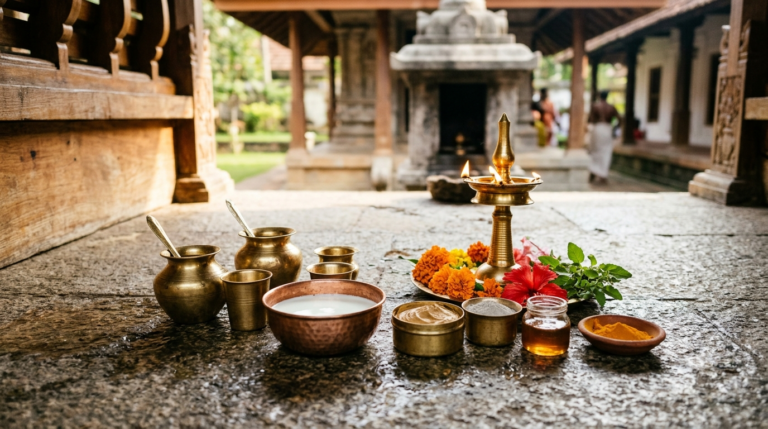
The temple performs abhishekam three times a day, at roughly 8 AM, 12 noon and 5 PM. One ticket admits two devotees. The ritual takes about 30 to 40 minutes with darshan, and staff hand out prasadam afterwards.
Devotees without an abhishekam ticket can still watch from the special darshan queue. Panchamritha abhishekam is the richer version at an indicative ₹2,000, since it uses the five traditional ingredients. Our guide on Tiruttani temple abhishekam tickets and booking walks through the slot-by-slot process.
Thirukalyana urchavam and the Thanga Theru
The temple lists the thirukalyana urchavam, or celestial wedding seva, daily at about 10 AM for ₹4,000. One ticket admits two people. Families often book it before a wedding at home, because tradition links Tiruttani with Murugan’s marriage to Valli.
The Thanga Theru, or golden chariot procession, costs an indicative ₹3,500 for three devotees. Those three devotees pull the chariot themselves. Most listings place the slot in the evening near 7 PM, though the temple pauses it during multi-day festivals. Confirm the slot when you book, since the schedule moves.
Archana and kavasam in the Tiruttani temple pooja list
Sahasranama archana at ₹750 suits most first-time devotees. Gold and silver kavasam offerings sit at ₹1,000 each. Both are worth timing your visit around, because the priests dress the deity in armour for the duration.
Families usually take the vahana sevas from ₹8,000, or the sandal kappu at ₹10,000, to mark a vow or an anniversary. They book these well ahead rather than on arrival.
Why Soorasamharam Is Not Performed at Tiruttani
Tiruttani does not conduct Soorasamharam, the ritual re-enactment of Murugan’s victory over Surapadman. Temple tradition holds that Murugan came to this hill afterwards to let his anger subside. That belief gives the hill its name, Thanigai, meaning to cool down.
This matters because several travel pages promise a Soorasamharam spectacle here during the Aippasi festival season. Devotees plan a long journey around it and then find no such event. If Soorasamharam is your reason for travelling, Tiruchendur is the shrine that performs it.
One more detail rewards attention. At Tiruttani, artists often depict Murugan’s mount as an elephant rather than the usual peacock, and he carries the vajra vel. Anyone touring the six Arupadai Veedu Murugan temples notices the difference immediately.
How Do You Book Sevas from the Tiruttani Temple Pooja List?
You book Tiruttani sevas at the temple counter on the hill, or through the temple’s official HR&CE page, which carries a temple booking service. Most devotees book abhishekam and kalyanam a day ahead, because same-day slots often close early. Carry original photo ID for any booked seva.
- Open the official site at tiruttanimurugan.hrce.tn.gov.in and find the temple booking service.
- Choose the paid services section, then select your seva.
- Pick the date and, where the portal offers one, the time slot.
- Enter devotee names and ID details exactly as your identity document shows them.
- Pay through the government gateway and save the e-receipt.
- Report at the temple office on the day with the printout and the same ID.
Online availability varies by seva. The temple releases some offerings online while others stay counter-only. So treat the portal as the first place to check, not a guarantee. The wider Tamil Nadu HR&CE department portal lists the department’s temples and services.
How to Tell the Official Portal From a Look-alike Site
Only web addresses ending in hrce.tn.gov.in belong to the Tamil Nadu government department. No private party can register that domain. A polished .com or .in site carrying the temple’s name and seva rates is not the department, however official it looks.
Three habits keep you safe. First, check that the address ends in hrce.tn.gov.in before you type card details. Second, close any checkout that adds a service or agent fee on top of the seva price, because the temple charges the seva fee alone.
Third, never upload Aadhaar images or ID photos to a private website for a darshan ticket. No genuine temple booking asks for that.
We take no bookings and handle no money here. This guide simply points you at the department and steps aside.
What If Your Seva Slot Is Not Available?
No seva booking carries a guarantee. The temple caps slots, festival days fill quickly, and processions pause during multi-day utsavams. If your chosen seva runs out, you still have workable options rather than a wasted trip.
- Shift the slot, not the day. Abhishekam runs three times daily, so midday or evening may open when the morning does not.
- Drop to a simpler offering. Sahasranama archana is far easier to get on the day than a kalyanam or vahana seva.
- Take special darshan and watch. A ₹100 ticket still lets you witness the abhishekam from the queue.
- Pick a quieter day. Tuesdays, Fridays, Krittika days, weekends and holidays draw the heaviest crowds.
- Ask the temple office directly. The counter releases cancellations and unclaimed slots, though staff promise nothing.
If a festival quota genuinely runs dry, there is no back door. Plan for the next available date instead of paying an agent who claims otherwise. That fallback logic is the part of the Tiruttani temple pooja list no official notice will spell out for you.
Dress Code, ID and What the Counter Expects
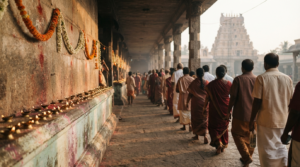
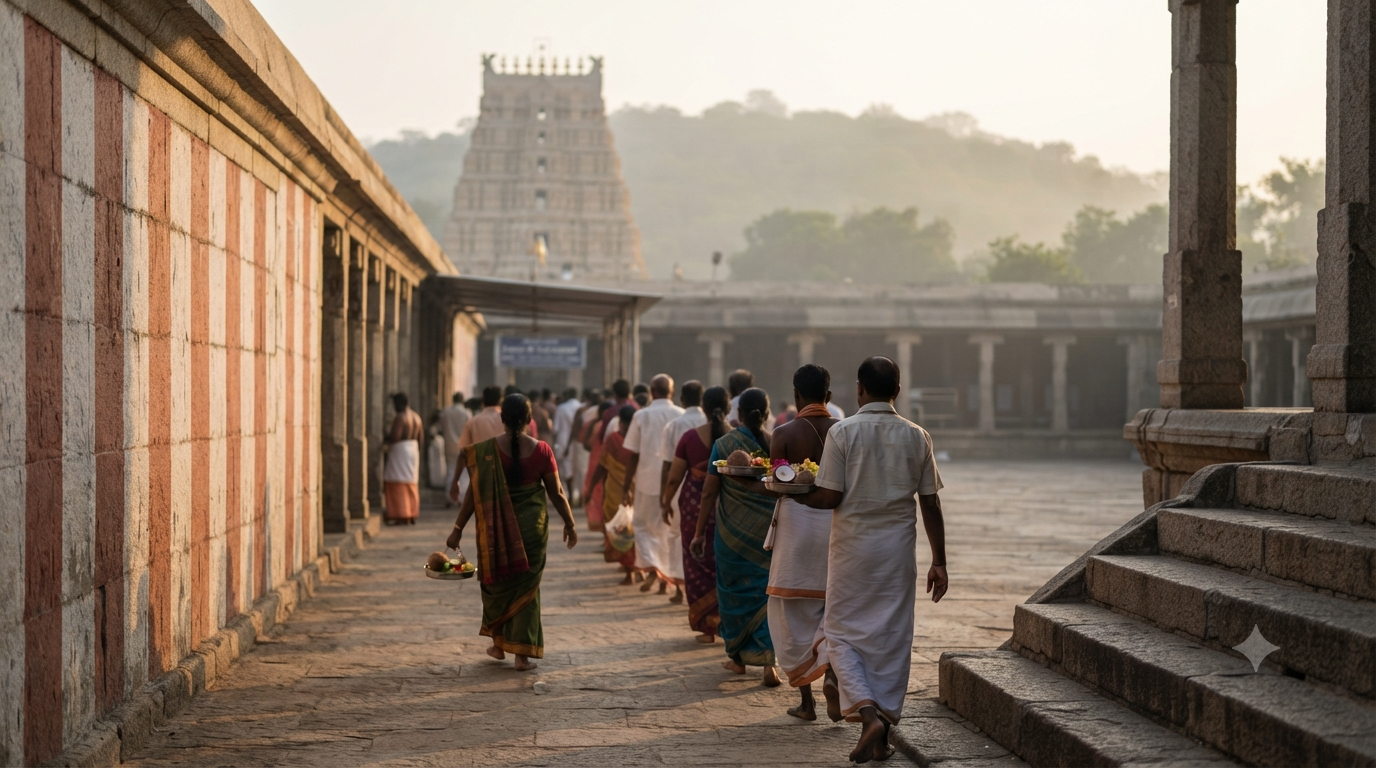
The temple expects traditional attire for any booked seva. Men usually wear a dhoti or pancha with a shirt or kurta. Women wear a saree with blouse, a half saree, or a churidar with dupatta. For general darshan the rule relaxes, though modest clothing remains the norm.
Carry original photo ID along with the e-receipt, since the office checks both at reporting time. You deposit footwear before entry. Monkeys along the step route will grab food from transparent bags, so keep prasadam and archana items covered.
365 Steps or the Ghat Road: Planning the Climb
Tiruttani sits on Thanigai hill, roughly 700 feet above sea level. The traditional route climbs 365 granite steps, one for each day of the year. Many devotees treat the climb as part of the vow itself.
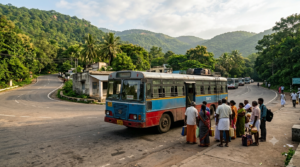
The ascent feels unhurried rather than steep. Even so, it demands real effort in South Indian heat. A ghat road also runs to the hilltop, with parking near the entrance and a short walk from there. Elderly pilgrims and families with small children should use it without hesitation.
A practical safety note: carry water and start early, while the granite is still cool. Take the steps slowly if you have heart, knee or breathing conditions, and remember that rain makes them slippery.
Anyone fasting before a seva, or managing a medical condition, should speak to a doctor first. Ritual and astrological offerings belong to faith and tradition. They do not replace medical treatment.
How the Tiruttani Temple Pooja List Changes on Festival Days
On major days the Tiruttani temple pooja list expands, hours stretch, and some processions stop entirely. The temple observes Aadi Krittikai, Thai Poosam, Panguni Uthiram, Vaikasi Visakam, Karthigai and Skanda Sashti. It is also known for the New Year step festival at the close of December, when devotees light the steps.
Krittika days each month, along with Tuesdays and Fridays, are the standing peak days for Murugan worship. Festival dates follow the Tamil lunar calendar, so they shift year to year and can differ by panchangam. Confirm the exact date on the temple’s official calendar rather than carrying last year’s date forward.
During multi-day utsavams the temple does not run the golden chariot procession. A Thanga Theru booking around Thai Poosam or Panguni Uthiram may therefore not go ahead. Ask the office when you book.
What Regular Tiruttani Pilgrims Do Differently
- They arrive before 8 AM. A weekday morning queue often clears in under an hour, while the same queue after 10 AM can run for two.
- They book abhishekam a day earlier. Same-day slots for abhishekam and kalyanam frequently sell out over weekends.
- They pair the trip with Tirupati. Tiruttani sits on the Chennai–Tirupati corridor, so families fold it into a Tirumala journey.
- They buy the ₹100 special darshan on crowded days. The time saved dwarfs the ticket price.
- They confirm rates at the counter. The board revises seva fees by order, and printed lists online lag behind.
Before You Go
Tiruttani rewards planning more than most Murugan shrines, because the seva menu is broad and the crowd pattern is predictable. Fix your seva first, then your slot, then your travel. Book at the counter or on the hrce.tn.gov.in portal, carry ID, and confirm the fee on the day rather than trusting any printed figure, including this Tiruttani temple pooja list. For a first visit, the 8 AM abhishekam gives the fullest experience for the money.
Tiruttani Temple Pooja List: Frequently Asked Questions
What is included in the Tiruttani temple pooja list?
The Tiruttani temple pooja list covers six daily poojas plus a set of paid sevas. The daily poojas are Viswaroopa, Kalasandhi, Uchikkala, Sayaraksha, Ardhajama and Palliyarai. Paid sevas include abhishekam, panchamritha abhishekam, sahasranama archana, gold and silver kavasam, kedaya urchavam, thirukalyana urchavam, the golden chariot procession, vahana sevas and sandal kappu.
How much does abhishekam cost at Tiruttani temple?
Abhishekam costs an indicative ₹1,500 for up to two devotees, while panchamritha abhishekam costs about ₹2,000. The ritual takes roughly 30 to 40 minutes with darshan, and prasadam follows. Confirm the current rate at the counter, since the board revises fees periodically.
What time is abhishekam performed at Tiruttani?
The temple performs abhishekam three times daily, at approximately 8 AM, 12 noon and 5 PM. The morning slot draws the biggest crowd because it follows the Kalasandhi pooja. Festival days can alter these timings, so reconfirm when you book.
Can I book Tiruttani sevas online?
You can book some sevas through the official temple page at tiruttanimurugan.hrce.tn.gov.in, which carries a temple booking service. Availability varies by seva and by date, and several offerings stay counter-only. Sri Vyasa Pooja does not book sevas or accept payments.
Is Soorasamharam celebrated at Tiruttani temple?
No. Tiruttani does not enact Soorasamharam, because tradition holds that Murugan came here after the battle to calm his anger. The temple observes Skanda Sashti, but the Soorasamharam re-enactment happens at Tiruchendur instead.
How much is special darshan at Tiruttani?
Special darshan commonly costs ₹100 per person and VIP darshan ₹200, while general darshan stays free. All three queues lead to the same sanctum. Most devotees buy special darshan tickets at the counter on the day of the visit.
How many steps are there at Tiruttani temple?
There are 365 steps to the hilltop shrine, traditionally read as one step for each day of the year. A ghat road also runs to a parking area near the entrance, so elderly devotees can skip the climb entirely.
Which day is best to visit Tiruttani temple?
An ordinary weekday morning is the easiest time for darshan and for securing a seva slot. Tuesdays, Fridays, Krittika days, weekends and festival days bring the largest crowds. To witness a full abhishekam without a long wait, aim for the midday or evening slot midweek.
Does the Tiruttani temple pooja list change during festivals?
Yes. The Tiruttani temple pooja list expands on festival days, hours extend, and the temple pauses some processions such as the golden chariot during multi-day utsavams. Check the official temple calendar before you book a seva around a festival date.