Key Information at a Glance
| Festival | Ugadi (also spelled Yugadi) |
| Marks | Telugu and Kannada New Year |
| When (tithi) | Chaitra Shukla Pratipada — first day of the bright half of Chaitra |
| Regions | Andhra Pradesh, Telangana, Karnataka |
| Key custom | Eating Ugadi Pachadi (six tastes) and Panchanga Sravanam |
| How to find date | Check a current-year panchangam for the Chaitra Pratipada date and Samvatsara name |
Significance of Ugadi
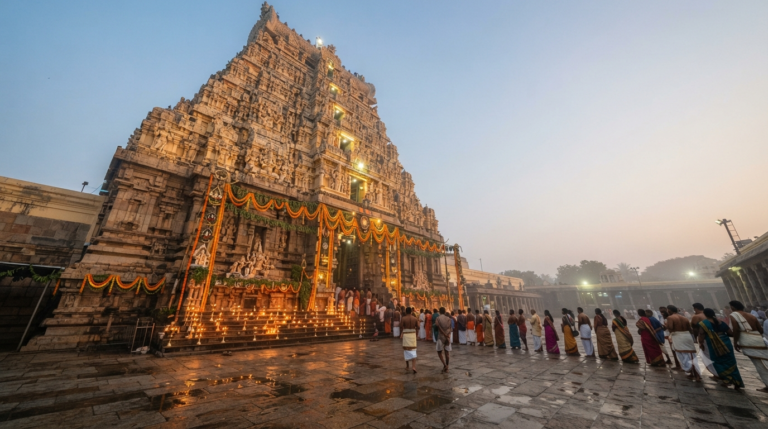
Ugadi takes its name from the Sanskrit words yuga (age or era) and adi (beginning) — literally “the start of a new age.” For Telugu-speaking people in Andhra Pradesh and Telangana, and for Kannada-speaking people in Karnataka, it is the first day of the new year. The same lunar day is observed as Gudi Padwa in Maharashtra and as the New Year in several other parts of India, since all follow the same Chaitra Shukla Pratipada tithi.
The festival arrives in spring, when trees put out fresh leaves and the harvest season turns. It is treated as an auspicious time for new beginnings — starting ventures, moving into homes, or simply resetting one’s outlook for the year ahead. Beyond the celebration, Ugadi carries a quiet philosophical message: that the year, like life, will bring a mix of experiences, and all of them are to be accepted with balance.
How the date and Samvatsara name are decided
Ugadi always falls on Chaitra Shukla Pratipada — the first day after the new moon that begins the lunar month of Chaitra. Because this follows the lunar calendar, the Gregorian date is different every year, usually landing somewhere in late March or early April. Rather than memorising a fixed date, the reliable way to find it is to look up the current year in a panchangam, which lists the precise tithi and timing.
Each year also carries a name drawn from a repeating cycle of 60 Samvatsaras. The cycle begins with Prabhava and ends with Akshaya, and is traditionally linked to the relative positions of Jupiter and Saturn, whose combined cycle works out to roughly 60 years. The 60 names are grouped into three sets of 20. Because this is a fixed sequence, the Samvatsara for any year — like the date itself — is best confirmed from a current panchangam rather than assumed.
Ugadi Pachadi and the six tastes
The centrepiece of the festival is Ugadi Pachadi, a special preparation eaten first thing in the morning. It deliberately combines six tastes in one dish, each standing for a different aspect of life — a reminder to take the year’s joys and difficulties with the same equanimity.
- Sweet — jaggery: happiness and pleasant experiences.
- Sour — tamarind: the unexpected and challenging moments.
- Bitter — neem flowers: the difficult or unpleasant times.
- Salty — salt: the essential, fundamental things in life.
- Spicy — green chilli: moments of anger or intensity.
- Tangy — raw mango: surprises and sharp, fresh experiences.
Ugadi customs and celebrations
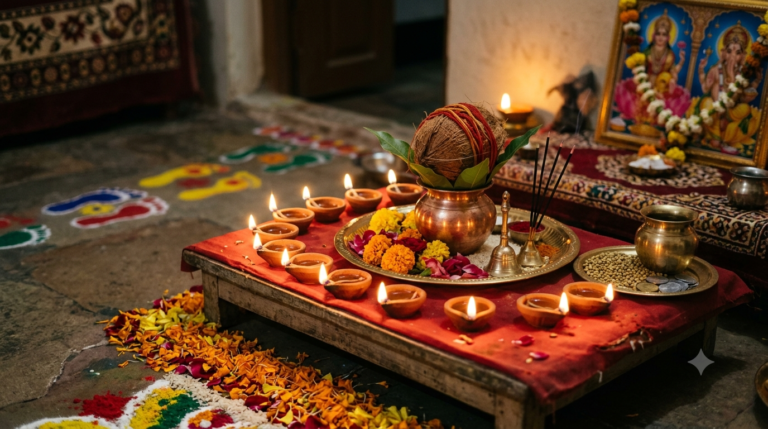
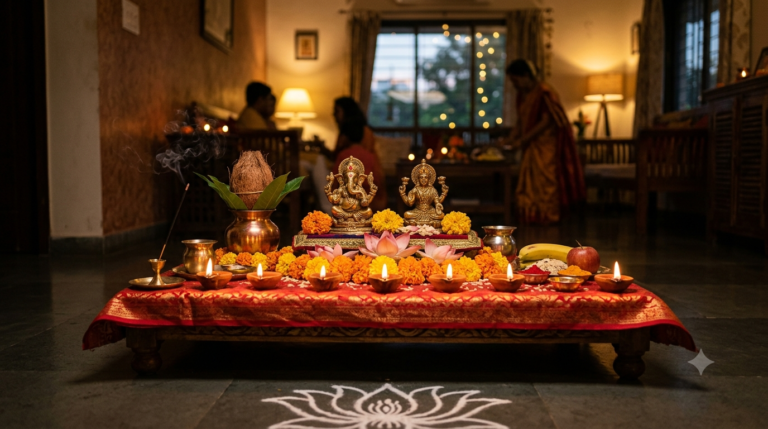
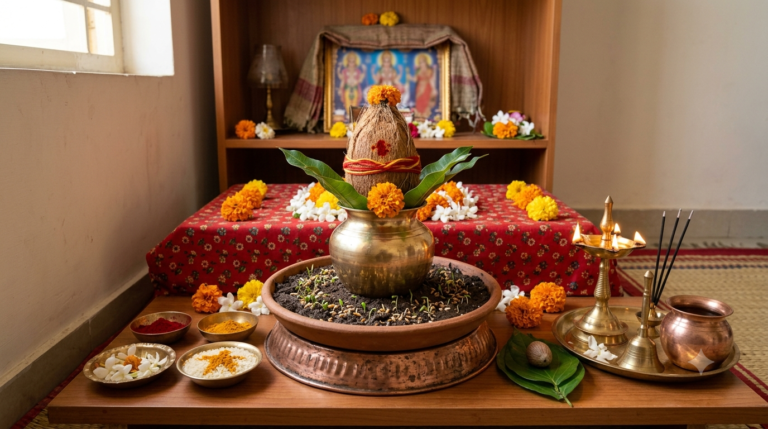
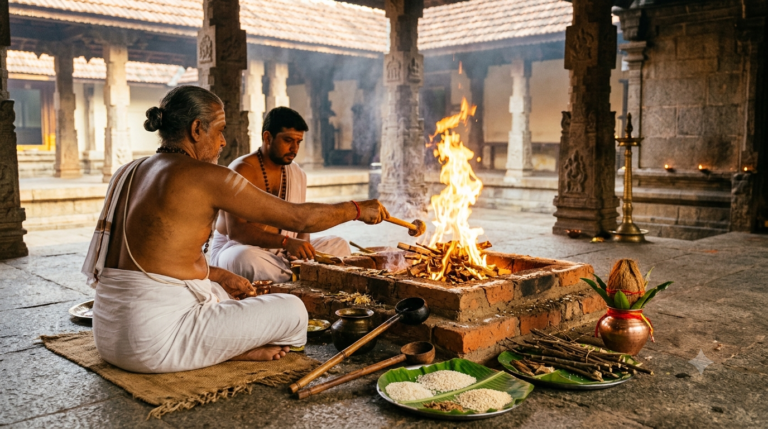
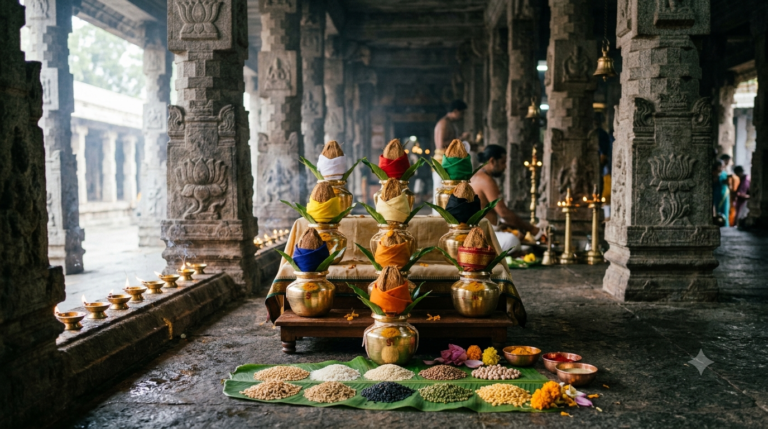
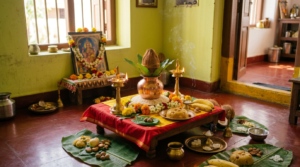
The day usually begins with an oil bath and the wearing of new clothes, both seen as ways of starting the year clean and renewed. Homes are decorated with mango-leaf garlands (torana) at the doorways and rangoli at the threshold. After prayers, families eat Ugadi Pachadi together before the rest of the festive meal.
A distinctive Ugadi tradition is Panchanga Sravanam — the listening to the year’s almanac. A priest or astrologer reads out the new panchangam, covering forecasts for the months ahead such as weather, agriculture, and general predictions for each zodiac sign. In Karnataka the festival is called Yugadi and follows much the same pattern, while in Andhra Pradesh and Telangana the Pachadi and Panchanga Sravanam are especially central. Regional touches vary — particular sweets, temple visits, and community readings differ from place to place — but the core of the day stays the same across all three states.
Frequently Asked Questions
When is Ugadi celebrated?
Ugadi falls on Chaitra Shukla Pratipada, the first day of the lunar month of Chaitra, which usually occurs in late March or early April. The exact Gregorian date changes each year, so it is best confirmed from a current-year panchangam.
What is a Samvatsara?
A Samvatsara is the name given to each year in a repeating cycle of 60. The cycle runs from Prabhava to Akshaya and is linked to the combined cycle of Jupiter and Saturn. Each Ugadi begins a new Samvatsara, whose name you can find listed in the panchangam.
Why does Ugadi Pachadi have six tastes?
The six tastes — sweet, sour, bitter, salty, spicy, and tangy — stand for the different experiences life brings, from joy to difficulty. Eating them together at the start of the year is a reminder to accept whatever comes with balance and grace.
Is Ugadi the same as Gudi Padwa?
Ugadi and Gudi Padwa fall on the same lunar day, Chaitra Shukla Pratipada, and both mark the New Year. Ugadi is observed in Andhra Pradesh, Telangana, and Karnataka, while Gudi Padwa is the Maharashtrian celebration, each with its own customs.