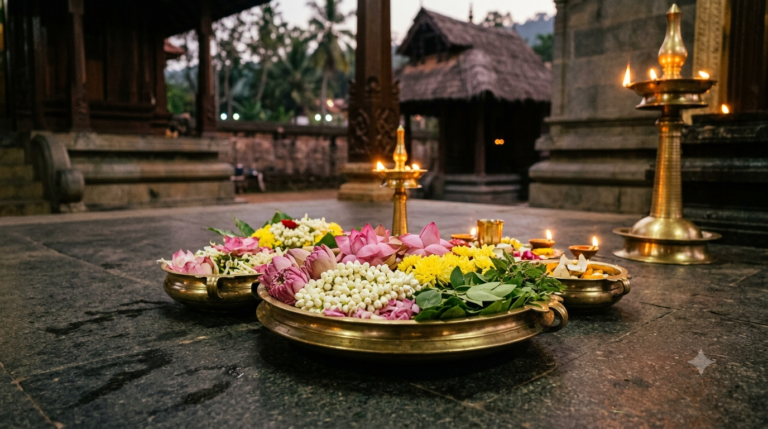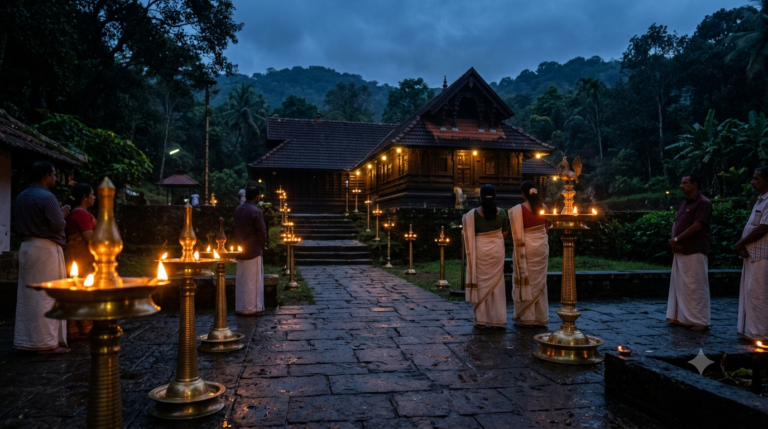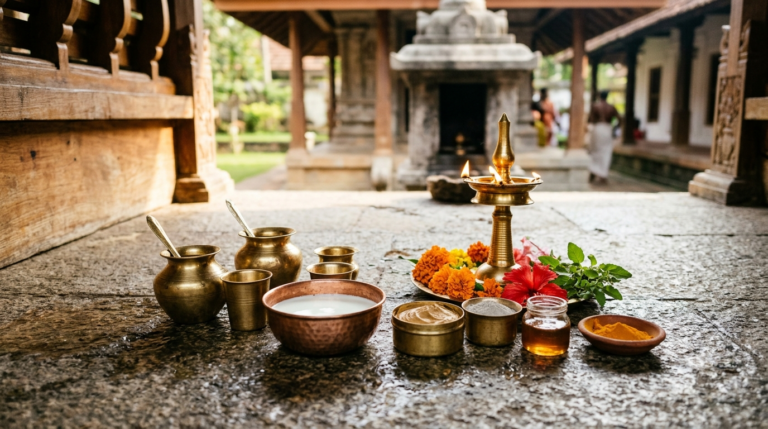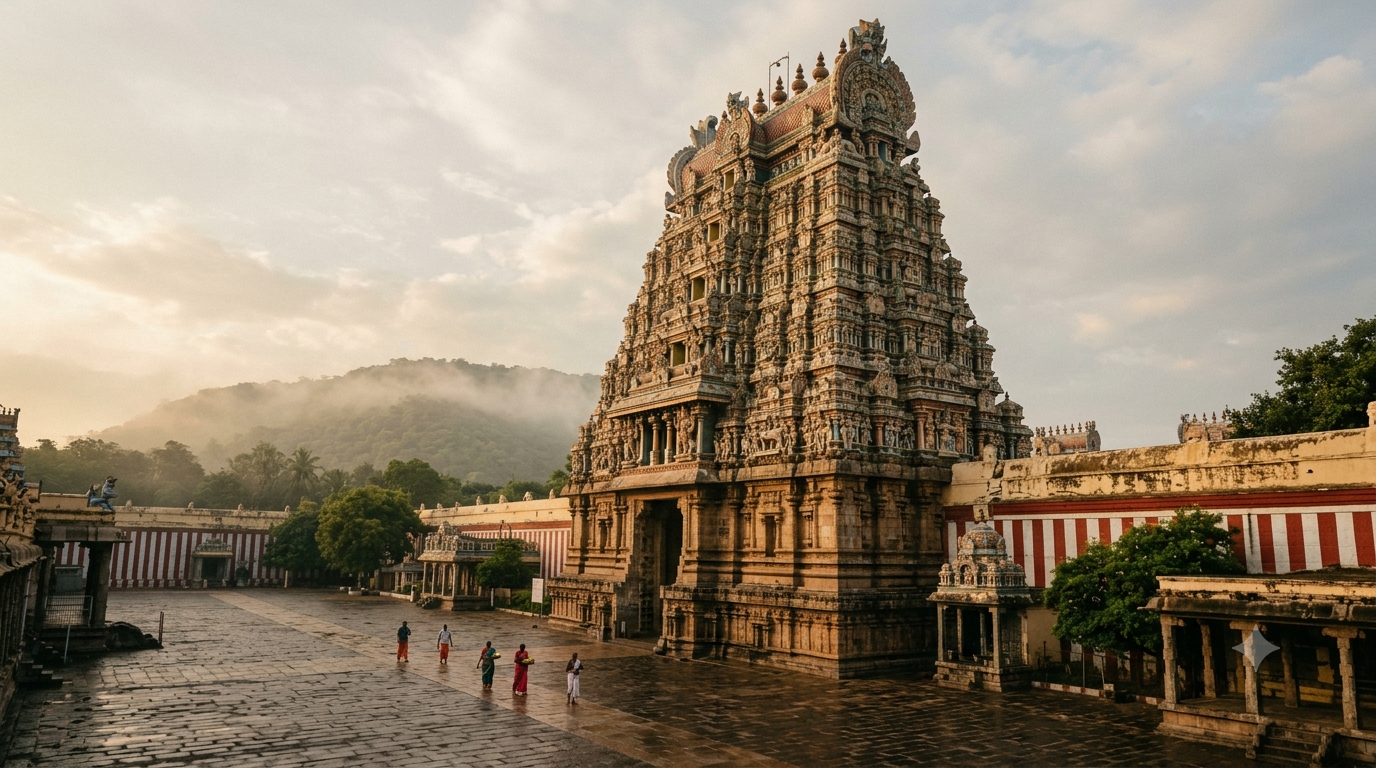
The most sacred Shiva temples in India draw millions of pilgrims each year, yet a smooth visit takes more than devotion alone. From the snow-bound shrine of Kedarnath to the riverbank sanctums of the south, every site keeps its own timings, booking rules, and best season. This guide gathers the practical details into one place, so you spend less time guessing and more time in darshan. Because the rules genuinely differ from temple to temple, a little planning saves hours in the queue.
Sri Vyasa Pooja is an independent pilgrim guide. We are not affiliated with, endorsed by, or the official website of any temple, trust, or endowments board. We do not take bookings, donations, or payments, so always use the official temple portals linked below for reservations and confirmed information.
Shiva Temples in India at a Glance
Before the deep dive, here is the quick picture for busy pilgrims. These points cover what most travellers ask first.
- The twelve Jyotirlingas form the holiest circuit, and they stretch across nine states from Kedarnath to Rameswaram.
- General darshan is free at almost every major temple, while paid “quick” darshan is only an optional extra.
- The best season runs October to March for southern and western shrines, though Himalayan temples suit April to June and September to October.
- Kedarnath reopened on 22 April 2026, and it usually closes by early November when the snow returns.
- Book only through official trust portals, since third-party “package” sites often charge inflated fees.
- Carry water, dress modestly, and start early because queues build fast after sunrise.
What Makes These Shiva Temples in India So Sacred
Most revered Shiva temples in India belong to one of three sacred groups. The twelve Jyotirlingas are self-manifested lingams of light. The Pancha Bhoota Sthalas are five temples tied to earth, water, fire, air, and space. A few shrines also overlap with the Shakti Peethas, so they carry twin significance.
The Pancha Bhoota Sthalas sit almost entirely in the south. Ekambareswarar at Kanchipuram represents earth, while Jambukeswarar at Thiruvanaikaval stands for water. Arunachaleswarar at Tiruvannamalai holds the fire element, and Srikalahasti embodies air. Chidambaram completes the set as the temple of space, or ether.
Srisailam is a rare double site, since it is both a Jyotirlinga and a Shakti Peetha in one complex. Rameswaram carries deep ties to the Ramayana, because Lord Rama is believed to have worshipped Shiva there. This layering of legend is exactly why these temples reward a little study before you go.
The 12 Jyotirlingas: The Holiest Shiva Temples in India
The twelve Jyotirlingas are the most important Shiva temples in India for a pilgrimage. Each one marks a spot where Shiva is believed to have appeared as an endless pillar of light. They span the country, so most devotees cover them region by region rather than in one trip.
| Jyotirlinga | Location | Best Time |
|---|---|---|
| Somnath | Gujarat | Oct–Mar |
| Mallikarjuna (Srisailam) | Andhra Pradesh | Oct–Mar |
| Mahakaleshwar | Ujjain, Madhya Pradesh | Oct–Mar |
| Omkareshwar | Madhya Pradesh | Oct–Mar |
| Kedarnath | Uttarakhand | May–Jun, Sep–Oct |
| Bhimashankar | Maharashtra | Oct–Feb |
| Kashi Vishwanath | Varanasi, Uttar Pradesh | Oct–Mar |
| Trimbakeshwar | Nashik, Maharashtra | Oct–Mar |
| Baidyanath | Deoghar, Jharkhand | Oct–Mar |
| Nageshwar | Dwarka, Gujarat | Oct–Mar |
| Ramanathaswamy | Rameswaram, Tamil Nadu | Oct–Apr |
| Grishneshwar | Ellora, Maharashtra | Oct–Mar |
Kedarnath is the only Jyotirlinga that shuts for winter. It reopened on 22 April 2026, and it typically closes around early November when heavy snow makes the region unreachable. Kashi Vishwanath and Mahakaleshwar stay open all year, yet they draw their heaviest crowds during Sawan, the monsoon month of Shravan, and on Mahashivratri.
South Indian Shiva Temples Worth the Journey
The south holds some of the oldest and most atmospheric Shiva shrines. Srisailam sits above the Krishna river, and its Sparsha darshan lets devotees touch the lingam. That touch darshan is free, and there is no online ticket for it, so plan to reach the counter early. You can read the full steps in our Srisailam Sparsha darshan guide.
Srikalahasti, near Tirupati, is famous for its Rahu-Ketu pooja and its air-element sanctum. General darshan here is free, while special pooja slots are handled at the counter. Our Srikalahasti darshan guide covers the timings and pooja steps in detail.
Closer to Tirumala, Kapila Theertham pairs an early-morning Abhishekam with a seasonal waterfall. The nearby Gudimallam temple holds one of the oldest known Shiva lingams in India. At Tiruvannamalai, pilgrims walk the 14 km Girivalam around Arunachala hill, and our Girivalam route map maps every stop. Further south, the Chola-built Brihadeeswarar temple at Thanjavur remains a UNESCO marvel, while Ekambareswarar at Kanchipuram anchors the Pancha Bhoota group.
Himalayan and North Indian Shiva Shrines
The mountains raise the stakes and the reward. Kedarnath sits at 3,583 metres, so the pilgrimage means a long trek and thin air. Tungnath, often called the highest Shiva temple in the world, is a shorter climb from Chopta. Rudranath, one of the Panch Kedar shrines, demands a tougher trail, and our Rudranath timings guide helps you plan it.
In the plains, Kashi Vishwanath in Varanasi anchors the whole Shaiva map. Its official portal for darshan and aarti booking is the Shri Kashi Vishwanath Temple website, and nothing else is genuine. Somnath on the Gujarat coast rebuilt itself many times through history, while Mahakaleshwar in Ujjain is known for its pre-dawn Bhasma Aarti. That aarti needs advance booking, because tickets sell out fast on Mondays and during Sawan.
Best Time to Visit Shiva Temples in India
The best time to visit most Shiva temples in India is October to March, when the weather stays cool for long queues. Himalayan shrines follow a different clock, since they open only from late April and stay reachable until October or early November. Match your plan to the region, and you avoid both harsh heat and closed gates.
Southern and western temples such as Rameswaram, Somnath, and Srisailam feel best in the cool months. Because summer heat can be draining near coastal and plateau shrines, avoid April to June where you can. For the Char Dham circuit, late April to June and September to October are the safest windows. Monsoon months from July to August bring landslides on hill routes, so most guides advise against them.
Crowds matter as much as weather. During Sawan and on Mahashivratri, temples like Kashi Vishwanath, Mahakaleshwar, and Trimbakeshwar swell to several times their usual footfall. If you prefer a calmer darshan, pick a weekday outside these peaks.
Darshan Timings and the Booking Reality
General darshan is free at nearly every major Shiva temple, and you rarely need to book anything for it. Paid quick darshan and special aartis are optional extras, and only some temples offer them online. This single fact clears up most of the confusion travellers meet on aggregator sites.
At Kashi Vishwanath, general darshan is free, while Sugam (quick) darshan and aarti seva are bookable through the official portal. Mangla Aarti and Rudrabhishek need advance tickets, because seats are limited. At Mahakaleshwar, the famous Bhasma Aarti also needs advance booking, whether online or at the authorised counter.
Down south, Srisailam Sparsha darshan stays free with no online ticket, so early arrival is the only way in. Srikalahasti keeps general darshan free too, while its Rahu-Ketu pooja slots are booked at the temple counter. Timings shift on festival days, so confirm on the official portal before you travel.
Here is the pilgrim-protective part. Many private websites pose as “booking partners” and charge inflated fees for tickets that are free or cheap officially. A genuine official portal sits on the temple trust’s own domain, and it never demands a heavy upfront “processing fee.” When something feels off, skip it and book at the counter instead.
How to Plan a Shiva Temple Pilgrimage
Smart planning groups temples by region, not by wish list. A southern loop can string together Srisailam, Srikalahasti, Kapila Theertham, and Gudimallam around Tirupati in a few days. A Maharashtra circuit links Trimbakeshwar, Bhimashankar, and Grishneshwar with manageable drives between them.
The Himalayan leg needs the most care. For 2026, Char Dham pilgrims must carry a Yatra Pass from the official Char Dham registration portal, and checkpoints at Sonprayag and other gates verify it. Pilgrims above 60 need a medical fitness certificate, while mobile phones and cameras are now banned inside the Kedarnath premises. Register early, because peak-season slots fill quickly.
Build slack into every day. Queues, weather, and last-minute darshan changes are normal at popular shrines, so a buffer keeps the trip calm rather than rushed.
Health, Safety, and Dress Code
The hill shrines demand real fitness. Kedarnath alone is a 16 to 18 km trek from Gaurikund, though ponies and helicopter services exist for those who need them. Carry warm layers, water, and any regular medication, since weather turns fast at altitude. If you have a heart condition, are pregnant, or are over 60, consult a doctor before a strenuous climb, and carry the required fitness certificate.
During Mahashivratri, many devotees fast through the night. Break the fast sensibly, and keep fruit or water handy so you do not feel faint in a long queue. Ritual and astrological remedies are matters of faith and tradition, and they are never a substitute for medical treatment.
Dress modestly at every shrine. Cover your shoulders and knees, remove footwear at the marked stand, and expect some inner sanctums to admit only traditional attire. A little respect for the dress code smooths your entry everywhere.
Insider Tips Most Guides Miss
These small habits separate a rushed visit from a peaceful one. They cost nothing, yet they save real time.
- Arrive before the doors open, because the first darshan of the day is the calmest.
- Deposit your phone early where photography is banned, such as Kedarnath and the Kashi Vishwanath sanctum.
- Choose weekdays outside Sawan and Mahashivratri, since weekends draw far larger crowds.
- Keep small change ready for the shoe stand, offerings, and local transport.
- For any hill shrine, start the trek at dawn so you finish before the afternoon rain.
Before You Go
The most sacred Shiva temples in India reward pilgrims who plan by region, season, and crowd, rather than rushing everything at once. Keep darshan simple and free where you can, and pay only for the extras that genuinely help. Above all, book through official trust portals, cross-check details on resources like Incredible India, and treat any heavy processing fee as a warning sign. Do that, and your journey stays as peaceful as the shrines you came to see.
Frequently Asked Questions
Which are the most famous Shiva temples in India?
The twelve Jyotirlingas are the most famous, including Somnath, Mahakaleshwar, Kedarnath, Kashi Vishwanath, and Rameswaram. Southern favourites like Srisailam, Srikalahasti, and Tiruvannamalai add to the list. Together they cover most of a devotee’s pilgrimage map.
Is darshan free at Shiva temples in India?
Yes, general darshan is free at nearly every major Shiva temple. You only pay for optional extras such as quick darshan, special aartis, or specific poojas. There is no need to buy a ticket for ordinary darshan.
Do I need to book darshan online before visiting?
Usually no, because general darshan does not require any booking. A few temples offer online quick-darshan or aarti passes for convenience, yet these are optional. Sparsha darshan at Srisailam, for example, has no online ticket at all.
What is the best time to visit Shiva temples in India?
October to March suits most southern and western temples, thanks to the cool weather. Himalayan shrines like Kedarnath are best from late April to June and again in September to October. Avoid the monsoon on hill routes.
When did Kedarnath reopen in 2026?
Kedarnath reopened on 22 April 2026, as announced by the Badrinath-Kedarnath Temple Committee. It usually closes by early November when winter snow arrives. Always confirm the current dates on the official portal before booking travel.
Can senior citizens visit Himalayan Shiva temples?
Yes, with precautions and preparation. Pilgrims above 60 need a medical fitness certificate for the Char Dham route, and a doctor’s clearance is wise before any hard trek. Ponies and helicopter services help reduce the strain.
How do I avoid fake temple booking websites?
Book only on the temple trust’s own official domain, and never through a site demanding a heavy processing fee. Kashi Vishwanath, for instance, uses shrikashivishwanath.org and nothing else. When unsure, book at the temple counter instead.
What should I wear at a Shiva temple?
Dress modestly, cover your shoulders and knees, and remove footwear at the entrance. Some inner sanctums admit only traditional attire like a dhoti or saree. Comfortable clothing also helps during long queues and treks.