Performing Varalakshmi Vratam at home is far simpler than most guides make it sound. In 2026 the vratam falls on Friday, 21 August — not the 28th that many websites wrongly list. That single date error trips up thousands of families every year.
So getting it right matters before you plan anything else. This guide covers the correct date, the muhurat windows, and the full procedure for Varalakshmi Vratam at home. It also lists the samagri and the mistakes most guides skip. Every fact here is checked against Drik Panchang and traditional puja vidhi.
Sri Vyasa Pooja is an independent devotional guide. We are not affiliated with any temple, trust, or government body, and we do not accept bookings, donations, or payments.
For temple sevas, book only through each temple’s official channel. Ritual benefits described below are matters of faith and tradition, not guaranteed outcomes.
Varalakshmi Vratam 2026 at a Glance
- Date: Friday, 21 August 2026, verified on Drik Panchang
- Occasion: Last Friday of Shravana Shukla Paksha, before Shravana Purnima
- Best time: Evening Kumbha Lagna, overlapping Pradosh Kaal
- Who observes: Mainly married women, though men and unmarried women may join
- Deity: Varalakshmi, the boon-granting form of Goddess Mahalakshmi
- Concludes: Saturday, 22 August 2026, with Udyapana
When Is Varalakshmi Vratam 2026?
Varalakshmi Vratam 2026 is on Friday, 21 August. Families keep the vratam on the last Friday of Shukla Paksha in the Shravana month. That Friday always falls just before Shravana Purnima.
This year Purnima and Raksha Bandhan land on Friday, 28 August. So the vratam sits on the Friday before it, which is 21 August. Drik Panchang confirms this date.
Why Some Sites Show the Wrong Date
Many pages list 28 August. However, that day is actually Shravana Purnima and Raksha Bandhan, not the vratam. A few sites still show 8 August because they never updated their 2025 page.
The vratam is tied to the lunar calendar, so its date shifts every year. An old page copied forward will almost always be wrong. When in doubt, check the date on Drik Panchang for the current year.
Varalakshmi Puja Muhurat 2026
Tradition favours a fixed (Sthira) Lagna for the puja. A fixed ascendant is believed to bring lasting prosperity. Drik Panchang lists four such windows on 21 August, and any one of them works.
- Simha Lagna (morning): around 6:53 AM to 8:56 AM
- Vrishchika Lagna (afternoon): around 1:35 PM to 3:54 PM
- Kumbha Lagna (evening): around 7:39 PM to 9:05 PM
- Vrishabha Lagna (midnight): around 12:03 AM to 1:58 AM on 22 August
These clock times shift by city, so confirm the exact minutes for your town. The evening Kumbha Lagna overlaps Pradosh Kaal. Most families treat it as the most auspicious slot.
The 16-Step Puja Procedure
The puja follows the sixteen-step Shodashopachara format. It closely resembles the Mahalakshmi puja on Diwali. Two extra rites make it distinct.
The Dorak is the sacred thread, and the Vayana is the set of gifts shared with other married women. Worship always opens with Lord Ganapati to clear obstacles. It then moves to the Goddess through the Kalasham.
After the invocation, you offer the sixteen upacharas one by one. Dhyanam and Avahanam seat the Goddess, while Padyam and Arghyam form the ritual welcome. Snanam and Vastram cover bathing and clothing.
Gandham, Pushpam, Dhoopam, and Deepam bring sandal, flowers, incense, and lamp. The puja then closes with Naivedyam, Tambulam, and the Mangala Aarti. Many devotees chant “Om Shreem Mahalakshmyai Namah” and recite the Lakshmi Ashtottara, the 108 names.
How to Prepare for Varalakshmi Vratam at Home
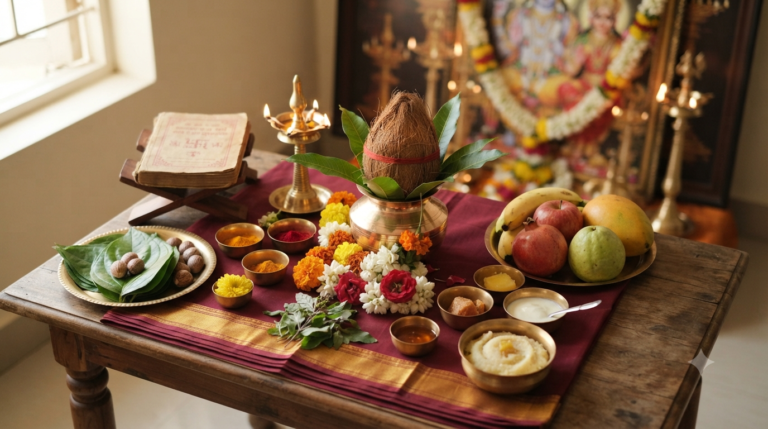
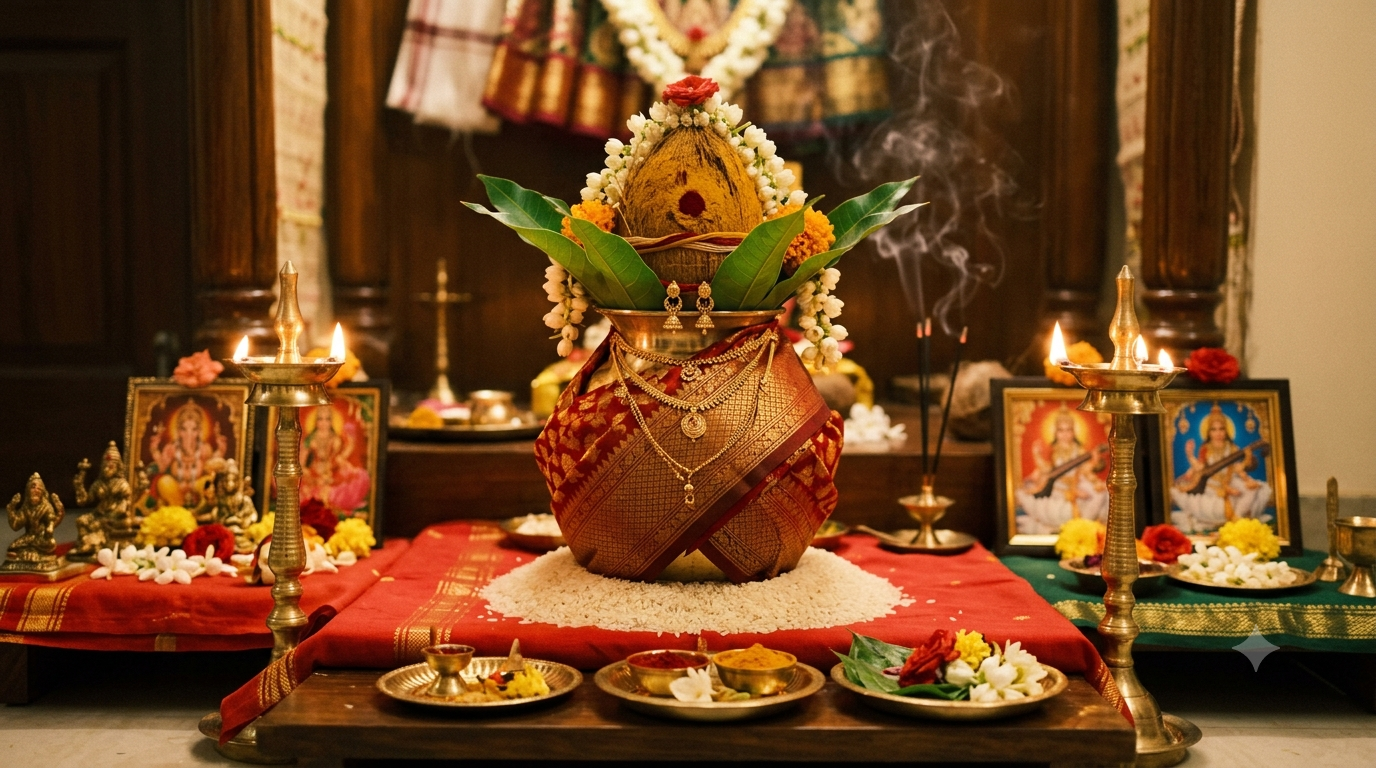
The Kalasham stands in for the Goddess, so its setup is the heart of Varalakshmi Vratam at home. Place a wooden plank first. Spread a fresh cloth and a handful of rice, then set a brass or silver pot on top.
Fill the pot with rice or water, a few coins, turmeric, and a betel nut. Ring the rim with mango leaves and crown it with a turmeric-smeared coconut. Then dress the pot as Varalakshmi with a silk saree, flowers, and a Goddess face. For a fuller walk-through, see our Vara Mahalakshmi Kalasam setup guide.
The Thoram and the Pongu Nool
People often confuse the two turmeric threads, so here is the clear difference. The Thoram, also called Dorak, has nine strands and nine knots. Each woman ties it on her own right wrist while chanting the Thorabandhana mantra.
The Pongu Nool is a separate single thread. You tie it around the neck of the Kalasham as the Goddess’s own Mangalsutra. Married women wear both, while young girls tie only the Thoram. Keep the wrist thread on until it falls off naturally.
How to Perform Varalakshmi Vratam at Home
Here is the whole process for Varalakshmi Vratam at home in a simple order. Prepare on Thursday evening, then perform the main puja during your chosen Friday muhurat. Read the list once fully before you start, so nothing breaks the flow on the day.
- Clean the puja area and draw a fresh kolam or rangoli.
- Set up the Kalasham and dress it as the Goddess.
- Take a sankalpa, a short vow stating your intention.
- Perform Ganapati puja first to remove obstacles.
- Invoke Varalakshmi and offer the sixteen upacharas.
- Recite the Ashtottara and the Varalakshmi katha.
- Tie the Thoram on your right wrist with the mantra.
- Offer Naivedyam, do the aarti, and share Vayana with sumangalis.
The Udyapana the Next Day
Do not move the Kalasham on Friday night. You dismantle it the next morning, on Saturday 22 August, during the Udyapana. Offer a short closing prayer first.
Then distribute the items inside as prasad. Sprinkle the Kalasham water around the house, and mix the rice with your household rice. This simple close seals the vratam for the year.
Varalakshmi Vratam at Home: Samagri List
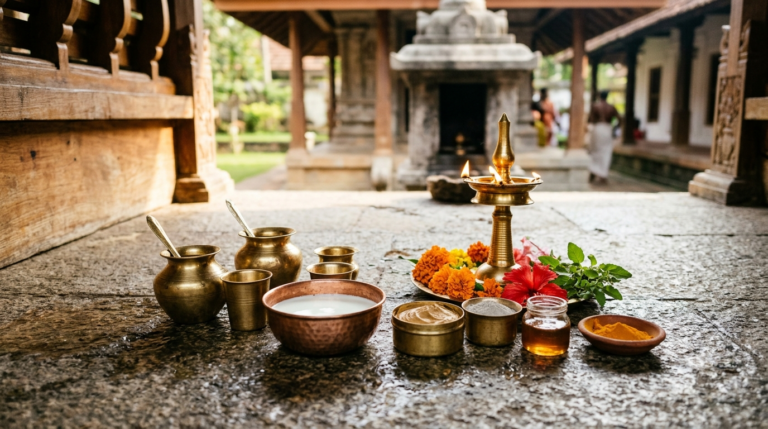
Keep the samagri for Varalakshmi Vratam at home ready the previous evening. Assembling items on Friday morning wastes precious muhurat time. You can also cross-check it against the official samagri list.
| Category | Items |
|---|---|
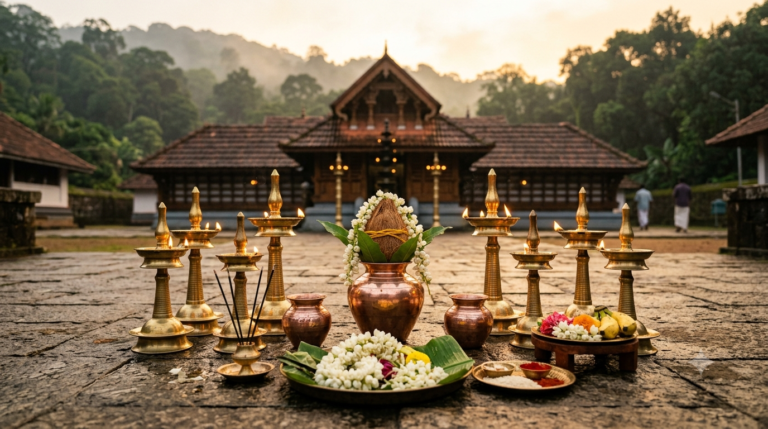
| Kalasham | Brass or silver pot, rice, coins, betel nut, turmeric, mango leaves, coconut |
| Decoration | Silk saree or blouse piece, flowers, gold ornaments, Lakshmi face or idol |
| Threads | Thoram with nine strands and nine knots, Pongu Nool, turmeric powder |
| Puja items | Kumkum, sandal paste, agarbatti, camphor, lamps, oil or ghee, wicks |
| Naivedyam | Payasam, sweets, fruits, jaggery, betel leaves for Tambulam |
The Story Behind Varalakshmi Vratam
The vratam grows out of a talk between Goddess Parvati and Lord Shiva. Parvati asked for a vrat to bless women on earth with prosperity. Shiva then described the Varalakshmi Vratam.
The best-loved version centres on Charumathi, a devout woman. The Goddess appeared to her in a dream and asked her to keep this vow. Charumathi performed it with her neighbours, and their families prospered.
So the practice spread across the South over time. Drik Panchang also records a parallel telling. In it, the vrat is taught to a devotee named Chitranemi to lift a curse.
Varalakshmi Vratam Fasting Rules and a Health Note
Fasting on this day varies by region and family custom, so follow your own sampradaya. Some keep a strict nirjala fast. Others take fruit, milk, or a single light meal until the puja ends.
You usually break the fast the next morning, on Saturday 22 August, after the Udyapana. Please treat your health as part of the devotion. If you are pregnant, elderly, diabetic, or unwell, avoid a waterless fast.
A simple phalahar fast carries the same sincerity without the risk. Ritual should bring peace, not strain, so listen to your body. Consult a doctor first if you manage any medical condition.
How Varalakshmi Vratam Is Observed Across South India
The core worship is shared, yet each region adds its own colour. In Andhra Pradesh and Telangana, devotees recite Sri Suktam and Lakshmi Sahasranamam. Sumangalis then gather to exchange prasadam.
In Tamil Nadu, families call it Varalakshmi Nombu and prepare kolukattai, payasam, and vadai. In Karnataka it blends with Gauri worship as Mahalakshmi Habba. In Maharashtra, South Indian families keep it with local touches.
Worshipping Varalakshmi is believed to equal honouring all eight forms of Ashtalakshmi. These cover wealth, earth, learning, love, fame, peace, pleasure, and strength. That belief is why the vratam feels so complete to devotees.
Common Mistakes Doing Varalakshmi Vratam at Home
A few avoidable slips can disrupt Varalakshmi Vratam at home. First, do not trust the date on an old page, since the vratam moves every year. For 2026, 21 August is correct.
Second, never move the Kalasham on Friday evening, because you dismantle it only during Saturday’s Udyapana. Third, keep the Thoram and Pongu Nool distinct, since they are not the same thread.
Finally, be wary of online “pandit booking” portals that demand large advance fees. Book a purohit only through a trusted, transparent source. Treat any site promising guaranteed results with caution.
Before You Begin
Varalakshmi Vratam is a gentle, joyful vow that rewards preparation far more than expense. Lock the date first — Friday, 21 August 2026. Then gather your samagri the night before and choose a muhurat window that suits your household. A calm, unhurried Varalakshmi Vratam at home always feels more meaningful than a rushed one.
Keep the worship sincere and unhurried. For deeper ritual detail, the Drik Panchang puja vidhi is a reliable reference. You may also enjoy our guide to Diwali Lakshmi Pooja.
Frequently Asked Questions
What is the correct Varalakshmi Vratam 2026 date?
Varalakshmi Vratam 2026 is on Friday, 21 August. It is the last Friday of Shravana Shukla Paksha, before Shravana Purnima. Ignore pages showing 28 August, since that is Raksha Bandhan and Purnima, not the vratam.
What is the best time to perform the puja?
The evening Kumbha Lagna window, which overlaps Pradosh Kaal, is considered most auspicious. Still, any of the four fixed-Lagna windows on 21 August is valid. Confirm the exact minutes for your city, because they shift with location.
Can men and unmarried women observe Varalakshmi Vratam?
Yes. Married women mainly keep the vratam, yet Drik Panchang notes that men and unmarried women may also observe it. Young girls usually tie only the Thoram and skip the Pongu Nool.
What is the difference between the Thoram and the Pongu Nool?
The Thoram is a nine-knot turmeric thread worn on the devotee’s right wrist. The Pongu Nool is a single thread tied on the Kalasham as the Goddess’s Mangalsutra. They serve different roles, so do not swap them.
What samagri do I need for the vratam?
You need a Kalasham with rice, coins, turmeric, mango leaves, and a coconut. Add a silk cloth, flowers, lamps, kumkum, the Thoram threads, and naivedyam sweets. Prepare everything the previous evening to save muhurat time.
When is the fast broken?
You usually break the fast on Saturday morning, 22 August 2026, after the Udyapana. Follow your family tradition on whether to keep a strict or a phalahar fast.
Is it safe to fast during Varalakshmi Vratam?
For most healthy adults, a light phalahar fast is safe and traditional. If you are pregnant, elderly, or managing a health condition, avoid a waterless fast and consult a doctor first. Devotion matters more than the severity of the fast.
How long does Varalakshmi Vratam at home take?
A home puja for Varalakshmi Vratam at home usually runs about one to two hours. The exact length depends on how many mantras and namavalis you choose to recite. Try to begin within your chosen Lagna window, so the main aarti falls inside the auspicious time.
Do I need a priest for Varalakshmi Vratam at home?
No, you can do Varalakshmi Vratam at home without a priest. Many families simply follow a printed vidhi or a trusted audio guide step by step. A purohit only helps if you prefer a longer, fuller Sanskrit procedure.
Can I book a purohit for the puja online?
You can, but choose only a transparent and trusted source. Avoid portals that demand large advance fees or promise guaranteed results. Sri Vyasa Pooja does not take bookings; we only explain the procedure so you can arrange help independently.