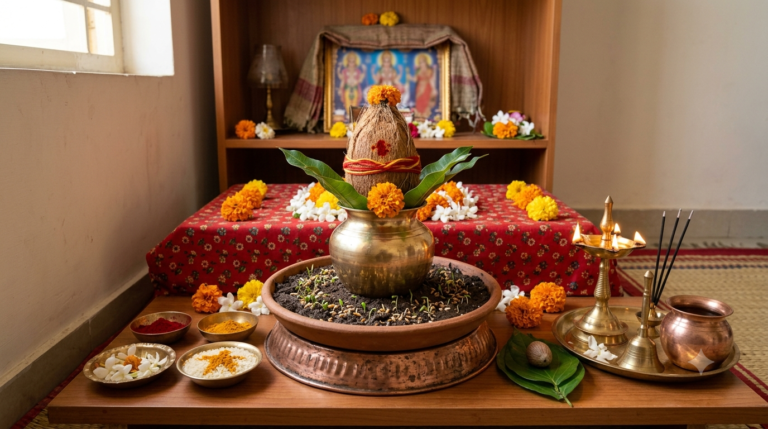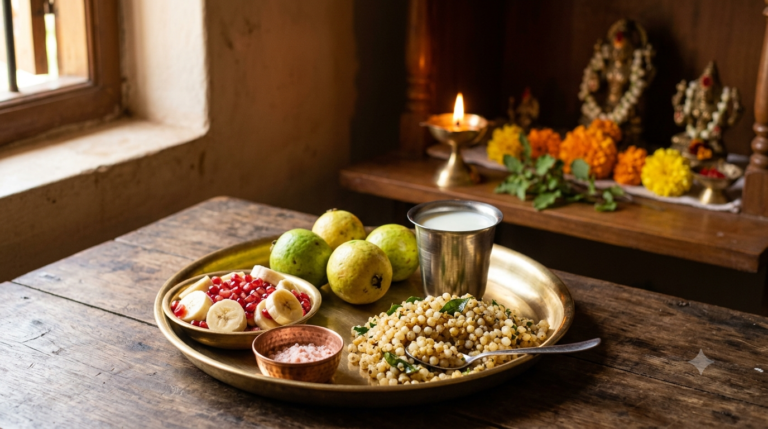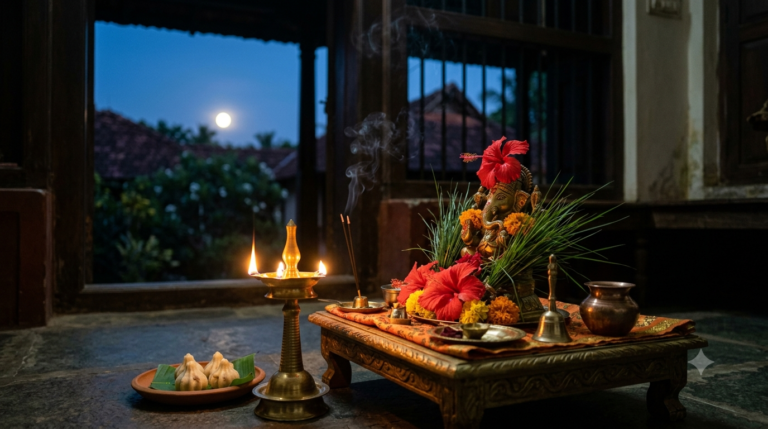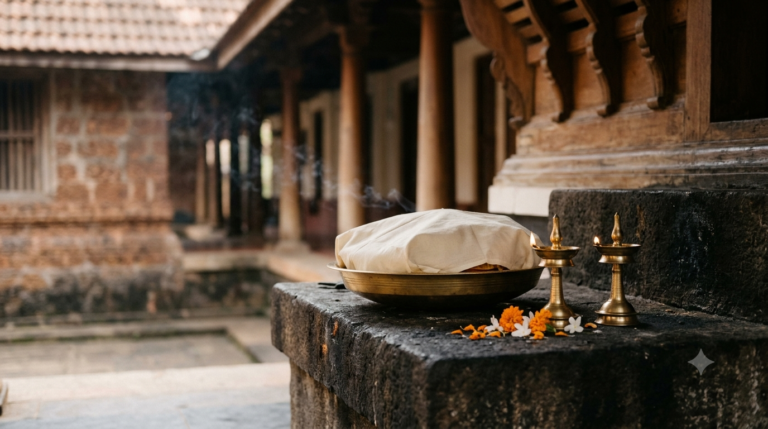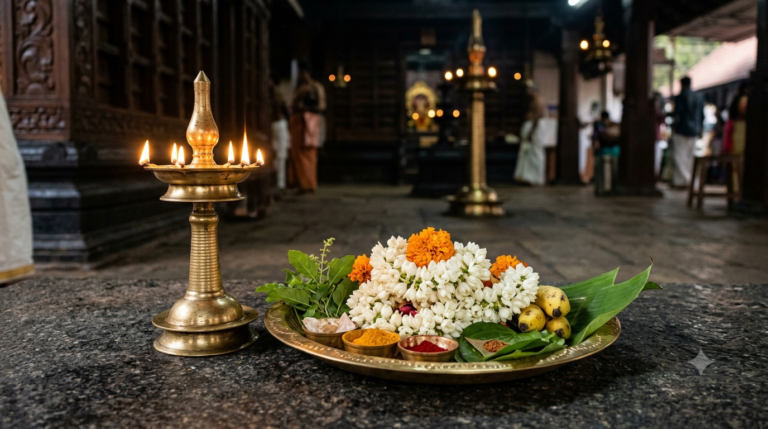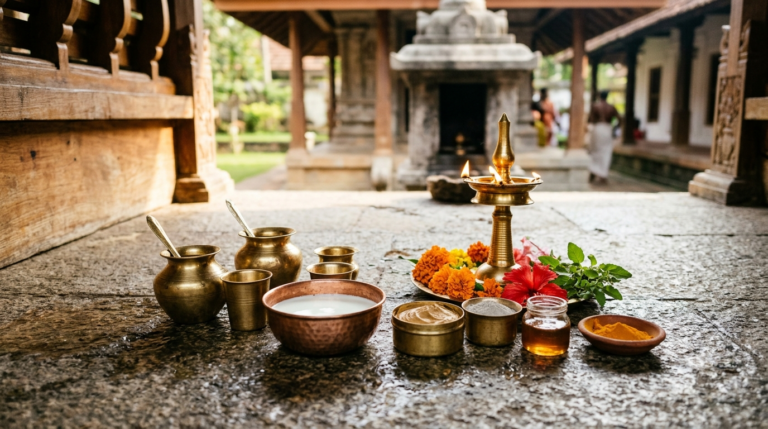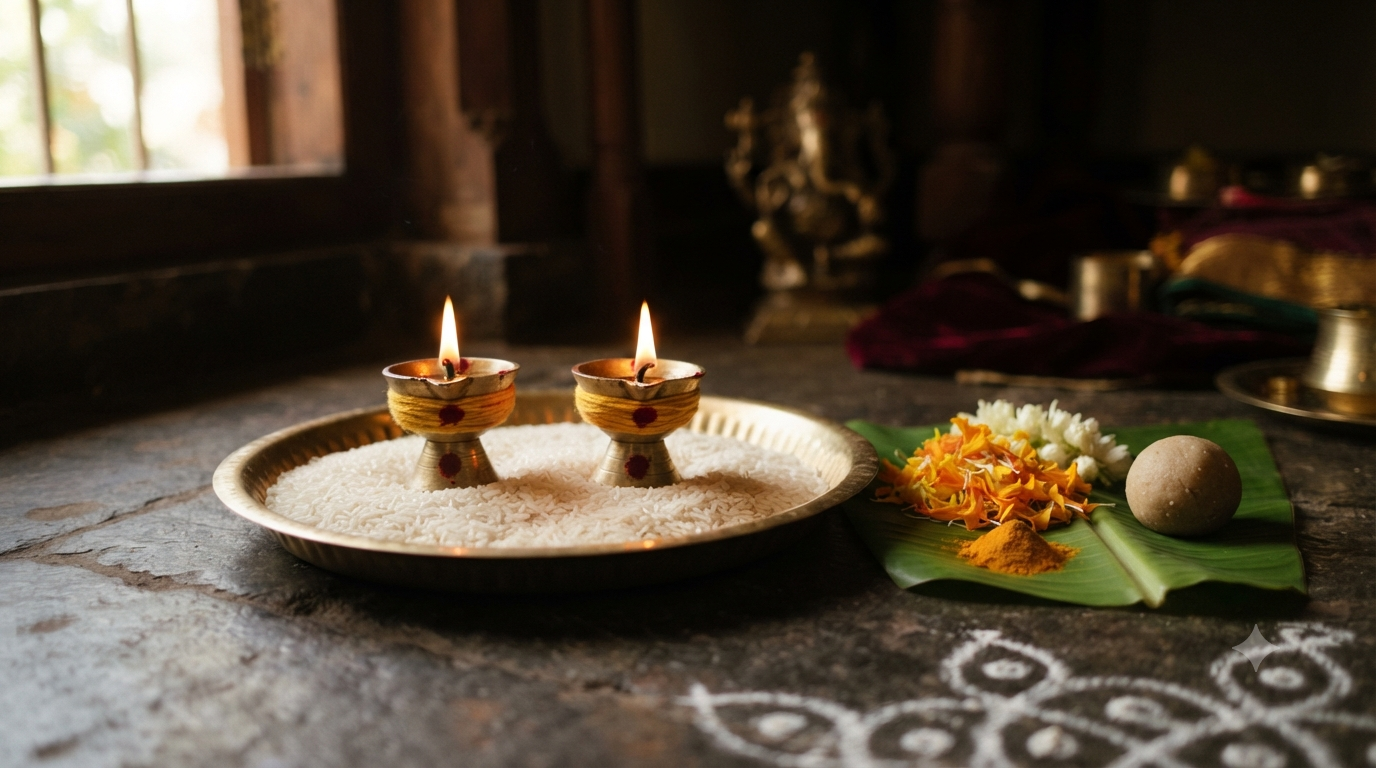
Jyothirbheemeshwara Vratam Pooja Vidhanam is a ritual most Kannada and Telugu families recognise on sight, yet very few can recite in the correct order. Two clay lamps, a plate of dough balls, a brother waiting with a stone — the images are familiar. The sequence, the sankalpa and the right day are where households get stuck, because almost every detailed guide online is written in Kannada. If you searched for a Telugu PDF and landed on ten identical pages, this guide answers what those pages skip.
Sri Vyasa Pooja is an independent devotional guide. We are not affiliated with any temple, mutt or trust, and we do not accept bookings, donations or payments. Ritual details vary by family tradition — confirm yours with your family purohit.
Jyothirbheemeshwara Vratam at a Glance
- Also called: Bheemana Amavasya, Pathi Sanjeevini Vrata, Deepastambha Pooja, Gandana Pooje
- Deities: Lord Shiva and Goddess Parvati, invoked together in two lamps
- Day: Amavasya of Ashada masa in the Kannada (amanta) calendar
- Observed by: Married women, and unmarried girls praying for a good husband
- Traditional duration: nine years after marriage in many Madhwa households
- Signature ritual: a brother or son breaking the bhandara (a dough ball with a coin inside)
- 2026 date: Wednesday, 12 August 2026
What the Jyothirbheemeshwara Vratam Pooja Vidhanam Actually Is
The vratam is a women’s observance in which Shiva and Parvati are worshipped inside the flame of two lamps rather than as idols. The name breaks down simply. Jyothi means the lamp flame, and Bheemeshwara is Rudra worshipped within that flame, so the whole term points to the divine couple seated in light.
Because the lamps are the deity here, no murti is strictly required. That is why the ritual survives so easily in small flats and hostel rooms. A clean plate, two lamps and sincerity are genuinely enough.
The Jyothirbheemeshwara Vratam Pooja Vidhanam belongs primarily to Karnataka. Telugu-speaking families in Bengaluru, Kolar, Bellary, Raichur and the Rayalaseema border districts observe it too, which is exactly why Telugu instructions are searched for so often and found so rarely. In Andhra Pradesh proper, the same Amavasya is more commonly kept as Chukkala Amavasya, with a different emphasis.
The encyclopedic record of Bhimana Amavasya notes several regional names for the same new-moon observance, including Sati Sanjivini Vrat in the north and Divaso in Gujarat.
The 2026 Date, and the Mistake Half the Internet Made
Bheemana Amavasya fell on Wednesday, 12 August 2026. Several widely-read panchang listings, however, labelled 14 July 2026 as “Ashadha Amavasya” — and families who trusted that listing kept the vratam a full month early.
Here is why the two dates disagree. The year 2026 carried an adhika masa (Adhika Jyeshtha), so the lunar months shifted. In the Kannada amanta reckoning the Amavasya of 14 July closed Nija Jyeshtha, not Ashada. The Amavasya that actually closed Ashada arrived on 12 August.
Pan-India listings that name months by the purnimanta convention therefore print a different label for the same tithi.
The practical rule is short. Before fixing the Jyothirbheemeshwara Vratam Pooja Vidhanam for any year, follow a Kannada or Madhwa panchanga rather than a generic national amavasya table such as the Drik Panchang amavasya list, which names months by a different convention. In an adhika masa year the difference is a whole month, not a day.
| Year | Date | Weekday |
|---|---|---|
| 2025 | 24 July | Thursday |
| 2026 | 12 August | Wednesday |
| 2027 | Early August (confirm on a Kannada panchanga) | — |
Puja is completed in the morning wherever possible. Since the tithi must be current at the time of worship, most families finish before midday and break the fast afterwards.
Jyothirbheemeshwara Vratam Pooja Vidhanam: Step by Step
The Jyothirbheemeshwara Vratam Pooja Vidhanam runs in nine stages, from the bath to the bhandara. Follow them in order, because each stage assumes the previous one is complete. Nothing here needs a priest.
- Snana and preparation. Bathe early, wear a clean traditional saree, and clean the pooja space. Draw a rangoli where the lamps will sit.
- Prepare the two lamps. Shape two lamps from clay, or use two clean metal lamps. One represents Parvati and the other Parameshwara.
- Decorate the deepastambha. Place both lamps on a plate of rice, tie a turmeric-dyed thread around them, and adorn them with kumkuma, flowers and a small cloth.
- Light with ghee. Fill both lamps with ghee and light fresh cotton wicks. Traditionally the flames stay lit through the entire pooja.
- Sankalpa. Take water in your right palm, state your name, gotra and the purpose of the vrata, then release the water.
- Ganapati pooja. Offer akshate and a flower to a turmeric Ganapati first, as with any household vrata.
- Shodashopachara pooja. Offer the sixteen upacharas to the lamps — arghya, snana, vastra, gandha, akshate, flowers, dhupa, deepa and naivedya.
- Katha and arati. Read the vrata katha aloud so everyone present hears it, then perform mangalarati.
- Bhandara and vayana. A brother or son breaks the bhandara, and elders receive vayana with tamboola.
Samagri List for the Jyothirbheemeshwara Vratam Pooja Vidhanam
Assemble everything the night before, since shops shut early on Amavasya in many towns. The list below covers the standard Jyothirbheemeshwara Vratam Pooja Vidhanam followed in most households.
- Two clay or metal lamps, plus ghee and cotton wicks
- Raw rice for the base plate, and akshate (rice with turmeric)
- Turmeric, kumkuma, sandal paste and a turmeric-thread (gauri dara)
- Flowers, mango or betel leaves, and two coconuts
- Wheat or rice flour for the bhandara, and a coin to place inside
- Naivedya — kadubu, payasa, chitranna or any homemade sweet
- Blouse piece, bangles, tamboola and dakshina for vayana
- Camphor, agarbatti and a bell
Nothing on this list is expensive, and substitutions are accepted. If clay lamps are unavailable, clean brass lamps carry the same sanctity.
The Bhandara Ritual, and Why It Matters
The bhandara is the moment everyone in the family remembers, and it closes the Jyothirbheemeshwara Vratam Pooja Vidhanam. A ball of wheat or rice dough is prepared with a coin hidden inside, then baked or steamed until firm. After the pooja, a brother, son or husband breaks it open with his fist or a stone.
The coin becomes his. The act itself completes the sister’s or wife’s prayer for his long life, so the breaking is not a game even though children treat it as one. Where there is no brother present, a cousin, nephew or the husband may do it, and some families simply place the bhandara before the lamps instead.
The Katha Behind the Jyothirbheemeshwara Vratam Pooja Vidhanam
Every household that keeps the Jyothirbheemeshwara Vratam Pooja Vidhanam reads this story aloud. A Brahmin couple left on Kashi yatra and placed their young daughter with relatives. Those relatives, tempted by wealth, married the girl to a prince who had already died. Rain scattered the funeral party at the riverbank, leaving her alone with the body.
It was Ashada Amavasya. Remembering the vrata her mother never let her skip, she moulded two lamps from river clay, made bhandara from mud, and worshipped with wildflowers. Shiva and Parvati appeared as a young couple, and the prince was restored to life. The story explains the alternate name Pathi Sanjeevini — the vow that revives the husband.
Looking for a Jyothirbheemeshwara Vratam Telugu PDF? Read This First
No temple trust, mutt or government body publishes an official Telugu PDF for this vratam. That is the honest answer, and it is the one every “download” page avoids giving.
What genuinely exists is a free Kannada vrata PDF hosted by Sumadhwa Seva, a long-running Madhwa reference site. Telugu material circulates mainly as community booklets and YouTube recitations rather than as a single authoritative document.
So treat “Telugu PDF download” pages with caution. A legitimate page shows you the procedure on the page itself, exactly as the Jyothirbheemeshwara Vratam Pooja Vidhanam is set out above.
Be wary when a site asks for a phone number or an OTP before a download. The same applies when it redirects through several ad pages, charges a “processing fee” for a devotional text, or serves a scanned Kannada booklet under a Telugu title. Printing this page gives you the same content without the risk.
Where the Jyothirbheemeshwara Vratam Pooja Vidhanam Differs by Family
Guides rarely admit how much legitimate variation exists, which leaves first-year brides anxious about doing it wrong. These differences are all traditional.
- Duration: many Madhwa families observe it for nine years after marriage, while others continue lifelong
- Lamp material: clay in older practice, metal in most urban homes today
- Bhandara count: one ball in some homes, five or nine in others
- Naivedya: kadubu in Karnataka, payasam or chitranna in Telugu households
- Gandana pooje: some families additionally worship a decorated pot of oil
Follow your mother-in-law’s practice rather than an internet consensus. Continuity within a family carries more weight in vrata tradition than uniformity across families.
What First-Timers Most Often Get Wrong
Five mistakes account for most of the confusion, and every one of them is avoidable.
The first is the date, as the July 2026 example showed. The second is letting the lamps go out mid-pooja because the wicks were too short, so cut generous wicks and keep spare ghee within reach. The third is preparing the bhandara too soft, which means it crumbles instead of breaking cleanly.
The fourth is skipping the katha because it is long. Since the reading is the heart of the observance, it deserves the time. The fifth is treating the vratam as a transaction — the tradition frames it as an expression of devotion, not a guaranteed outcome.
Fasting Rules During the Jyothirbheemeshwara Vratam Pooja Vidhanam
Most women observe a nirahara or phalahara fast until the Jyothirbheemeshwara Vratam Pooja Vidhanam concludes, then eat the naivedya as prasada. Water is generally permitted, and there is no requirement to fast beyond midday.
Do apply common sense here. If you are pregnant, diabetic, elderly, recovering from illness or on regular medication, a partial fast with fruit and milk is entirely acceptable, and shastra explicitly allows relaxation. Please consult your doctor before any strict fast. Devotion is not measured by how hungry you become, and no vrata is a substitute for medical treatment.
Before You Light the Lamps
The Jyothirbheemeshwara Vratam Pooja Vidhanam asks for very little. Two lamps, ghee, a dough ball and an hour of unhurried attention will carry you through it properly. Verify your date on a Kannada panchanga, gather the samagri the previous evening, and read the katha aloud rather than silently.
If this is your first year, keep it simple and complete. You can add elaboration in later years as you learn your family’s specific practice. For related household observances, our guides to the Gowri Tadiya pooja vratha vidhanam in Telugu, the Swarna Gowri Vratha and the Pradosha Vratam follow the same step-by-step format.
Frequently Asked Questions
Can I perform the Jyothirbheemeshwara Vratam Pooja Vidhanam without a purohit?
Yes. This is a household vrata performed by women themselves, and no priest is required. The sankalpa, shodashopachara pooja and katha reading are all done by the observer. A purohit is optional and traditionally not part of it.
Is Jyothirbheemeshwara Vratam the same as Bheemana Amavasya?
They are the same observance under different names, and the Jyothirbheemeshwara Vratam Pooja Vidhanam is identical for both. Bheemana Amavasya describes the day, while Jyothirbheemeshwara Vrata describes the worship of Shiva in the lamp flame. Pathi Sanjeevini Vrata and Deepastambha Pooja refer to the same ritual too.
Which date should I follow if two panchangas disagree?
Follow the Kannada or Madhwa panchanga your family uses. Disagreements usually arise from amanta versus purnimanta month naming, and they widen sharply in an adhika masa year. Confirm with your family purohit when in doubt.
Can unmarried girls observe this vratam?
Yes, and many do. Unmarried girls traditionally observe it praying for a good husband, while married women observe it for their husband’s longevity. Both perform the same pooja, though the sankalpa wording differs slightly.
How many years should the vratam be observed?
Nine years after marriage is the common Madhwa practice. Other families continue it lifelong, and both are considered valid. Ask the elders in your household rather than following a general rule.
What if there is no brother to break the bhandara?
A son, cousin, nephew or the husband may break it instead. Some families place the bhandara before the lamps and break it themselves. The absence of a brother does not invalidate the vrata.
Can the pooja be done in the evening?
Morning is strongly preferred, since the Amavasya tithi must be running at the time of worship. Where morning is impossible, perform it while the tithi still lasts. Check the tithi end time on your panchanga first.
Is a Telugu PDF of this vratam available anywhere official?
No official Telugu PDF exists from any temple or trust. The most reliable free document is a Kannada vrata PDF on the Sumadhwa Seva website. Telugu instructions circulate mostly through family booklets and video recitations.